BlogWithIntegrity.com
Please subscribe to ML!
Breast Cancer | cancer survival | cancer treatment | clinical trials | from the author | health care costs | Medical News | Oncology (cancer) | Policy

No Room For Emotion or Exceptions to the Rule

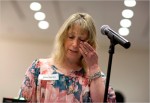
Betsy testifying

My cousin tes­tified before the FDA oncology advisory board on Tuesday about her expe­rience taking Avastin. This is a tragedy, to deny the only drug that is keeping a 51 year old woman alive.

image from p.3 of today’s NYTimes business section

You have to wonder, are the advisory panel members so rational in all their behavior and choices? Are they always so razor-​​​​like in their oncology decisions?

Unlikely.

These experts have an agenda, here: It’s to be per­ceived as sci­en­tists, even when their knowledge is imperfect and excep­tions to the rule stand right in front of their eyes.

But clinical med­icine, as I know it, calls for flex­i­bility, and tai­loring of treatment to each case, and caring about each person, including those who fall at the tail, or in this case better end, of any Kaplan-​​​​Meier survival curve.

What would Larry Kramer do about this, I’ve been thinking: He’d scream, really

See more No Room For Emotion or Excep­tions to the Rule (on Avastin)

Family | from the author | Life

Real Life Interrupts ML, In a Good Way!

graduation-cap

Dear Readers,

Today my younger son will graduate from high school. We’ve got a slew of fes­tiv­ities lined up. I’m happy and excited, and think it wise to sign off for a few days.

Enjoy the weekend!

ES

Related Posts:Happy Thanks­giving!A Change of PaceCel­e­brating a Hol­i­dayAbout this WeekLive Every Week Like It’s Shark Week, Again!

Academic Medicine | from the author | Life | Life as a Doctor

Some Articles I Authored A While Ago

This post, on my research in cancer immunology, is strangely personal.

At one level, what follows is nothing more than a list, a nar­rative if you will, a sketch of a for­mative chunk of my career and per­sonal history. I’ve wanted to put this out there (here) for quite a while, but couldn’t: It’s been hard for me, harder in some ways than was the breast cancer and spine surgery and all the other unpleasant ill­nesses I haven’t men­tioned yet, to come to grips with my near-​​​​hit aca­demic medial research career that stopped, which until today has been for the most part dis­con­nected from this blog and my new on-​​​​line life.

So here goes, a partial list of my pub­li­ca­tions, selected from ~30:

On a novel mech­anism for B-​​​​cell death, my first first-​​​​author article based on my research in lym­phoma immunology, in The Journal of Exper­i­mental Med­icine, 1995:

CD40 lig­ation induces Apo-​​​​1/​​Fas expression on human B lym­pho­cytes and facilitates

See more Some Articles I Authored A While Ago

Communication | from the author | Social Media

For April

Dear Readers,

For April I’ve decided to blog less often because I need to focus intensely on a book pro­posal and some other writing projects. I’ll write spo­rad­i­cally and probably, still.

Enjoy the weekend,

ES

Related Posts:Weds Web Sighting: A Blog on Medical Edu­cation, Ethics and Tech­nologyA Brief Note On Style­Blogging Addiction Disorder

from the author | Hematology (blood) | Public Health

On the Importance of Giving Blood

blooddonation-red

The other day I wrote on advances in arti­ficial red blood cells and devel­oping platelets from stem cells. But those methods are in early research phases. Mean­while, many patients need blood donated by adult humans, now.

I have per­sonally ben­e­fited from the gen­erosity of blood donors. Some were strangers: In 1974 I received seven units during and after surgery. I cannot thank those kind people directly, because I don’t know who they are, but I am surely grateful, besides forever for­tunate that those units didn’t harbor hepatitis or other now-​​​​known viruses. In 2003, friends and acquain­tances – a college friend’s wife, who over time has become as a cousin; a gen­erous and strong physical ther­apist who worked with me then, whom I’ve never thanked suf­fi­ciently, among others; and family — stepped in and helped me get through another tough pro­cedure by offering those vital pints.

If you’re healthy and without anemia, please con­sider donating blood through one of

See more On the Impor­tance of Giving Blood

Communication | from the author | Social Media

Medical Lessons is One Year Old!

Today Medical Lessons is one year old. That’s an important mile­stone in any blog’s life, as I suppose it is in this author’s.

Why blog, a mother in med­icine might ask me. I’m having fun with this project, for starters. Since November 17, 2009, I’ve taught myself how to use Word­Press, learned the ins and outs of website hosting com­panies and faulty servers, exper­i­mented with Twitter – on which I’m now hooked and, best of all, engaged a growing on-​​​​line group of inter­esting people.

What I like best, I think, is the freedom of modern pen­manship in this strange, new mode. “It’s my blog and I’ll write what I want” is my motto in this ongoing real life-​​​​segment. How cool is that?

Where ML is headed, I’m not entirely sure. It’s been picked up by the ACP Internist blog and, as of today, the Get Better Health network. I’m a firm believer in the concept that anything

See more Medical Lessons is One Year Old!

Annals of Pink | Breast Cancer | from the author

End of October, Breast Cancer Fatigue

Today the author fears she is suf­fering from breast cancer fatigue syn­drome, an unof­ficial and pos­sibly infec­tious con­dition that she named this morning, that comes from too much thinking about breast cancer and the inci­dence of which peaks in October, and/​​or that she may be suf­fering from writing-​​​​about-​​​​breast-​​​​cancer fatigue syn­drome, an affliction of some bloggers.

So she will take the rest of the afternoon and evening off, and do some reading and enjoy the weekend with her family.

Related Posts:A Note on the Komen Fias­coShout Out: Dr. Val Jones Hosts Grand Rounds at USA TodayWhy Should Physi­cians Blog or Use Twitter?A Con­fused Message on Breast Cancer In a Restaurant Win­dowGlad to Spot a Pink Ribbon

Breast Cancer | from the author | Life | Life as a Patient

Eight Years

Today marks exactly eight years since Dr. L., the fine radi­ol­ogist who may have saved my life, called to let me know about my breast cancer diagnosis.

With deep-​​​​felt thanks to my doctors, my friends, my family,

ES

Related Posts:A Change of PaceThe Iron Lady, a Film About an Aging Wom­an­Happy Thanks­giving!About this WeekLive Every Week Like It’s Shark Week, Again!

from the author | Social Media

Blog Housekeeping

Dear Readers,

You may have noticed that I’ve changed the ML format. Recently I switched web-​​​​hosts (a lesson and a half! for this mother-​​​​doctor who didn’t exactly know what a blog was a year ago), which seems already to have improved the site’s loading and up-​​​​time.

Over the next few days I’ll be exper­i­menting with this new theme. My goal is to streamline the look without for­feiting content. We’ll see how it goes -

I welcome sug­ges­tions from my readers.

Have a great day!

ES

Related Posts:No Related Posts

cancer survival | from the author | Life | Life as a Doctor | Life as a Patient | Patient Autonomy | TV

Living Like It’s Shark Week!

Today is the start of this year’s Shark Week on the Dis­covery Channel.

—-

Dialog from NBC’s 30 Rock, Season 1, Episode 4 “Jack the Writer” (2006)*:

Tracy Jordan: But I want you to know some­thing… You and me, it’s not gonna be a one-​​​​way street. Cos I don’t believe in one-​​​​way streets. Not between people, and not while I’m driving.

Kenneth: Oh, okay.

Tracy Jordan: So here’s some advice I wish I would have got when I was your age… Live every week, like it’s shark week.

(No further expla­nation is given. In the next scene the comedy writers take a one-​​​​minute dance break and then Jack pro­vides an intro to GE’s six sigma program.)

shark (adapted image from Wiki­media Commons)

*The 30 Rock episode is copyright-​​​​protected, but for a small fee or through a service like Netflix you can access it here. The rel­evant clip starts at ~1 min, 20 seconds and ends at  ~1 min, 54 seconds.

—– ADVERTISEMENTS:

See more Living Like It’s Shark Week!

from the author | Medical Ethics | Patient-Doctor Relationship | Privacy

Marilyn and Me (on Privacy)

My thoughts on the sale of a legend’s medical films, on HuffPo:

The X-​​​​rays of Others

(Yes, it’s a ref­erence to the movie.)

Related Posts:Henrietta’s Cells SpeakWhy I Support Health Care ReformHarsh Words, and Women’s Health at RiskKomen Update – Future Plans?A Note on the Komen Fiasco

from the author | Social Media

Feb 1, 2010

Well, the blog’s in some sort of tran­si­tional state between web hosts. (No one taught me about FTPs in med school, and blogs didn’t exist then. The “web” didn’t either, in fact.) It seems we need wait until tomorrow which, it happens, is Groundhog’s Day. It should be sunny, right? –ES

See more Feb 1, 2010

Communication | from the author | Ideas | Life | Life as a Doctor | Life as a Patient | Medical Education | Medical Ethics | Patient-Doctor Relationship

Why Medical Lessons?

One of the things I liked best about prac­ticing med­icine is that I was con­stantly learning. Making rounds at seven in the morning on an oncology floor would be a chore if you didn’t get to examine and think and figure out what’s hap­pening to a man with leukemia whose platelets are dan­ger­ously low, or whose lym­phoma is responding to treatment but can’t take anymore med­icine because of an intense, burn-​​like rash. You’d have to look stuff up, sort among clues

See more Why Medical Lessons?

Breast Cancer | cancer screening | Diagnosis | from the author | Statistics | Women's Health

Proposed Model for Evaluating False Positives in Screening Mammography, Dec 2009, Part 2

First, a def­i­n­ition* — False pos­i­tives happen in screening mam­mog­raphy when the images suggest the presence of a malig­nancy in a woman who doesn’t have cancer in her breast. Here’s my pro­posed model — False pos­i­tives can arise during any of three con­ceptual seg­ments of the testing process…

See more Pro­posed Model for Eval­u­ating False Pos­i­tives in Screening Mammography

Communication | from the author

A Note about Medical Lessons

Dear Readers,

The idea of this blog is to con­sider how people — patients and doctors both — find and interpret medical infor­mation, com­mu­nicate and make informed decisions.

There’s a lot to cover -

Some upcoming topics: health on-​​​​line, white coats, dealing with dis­ability, opting for pal­liative care and more.

Thanks everyone, for your support and interest!

Related Posts:When ‘No’ Turns Pos­itive in Medical Care and Edu­ca­tionHow Well Do You Really Want to Know the “Red Devil?”On Juno and Screening Test Stats­Dinner with my Fam­i­lyWhat Does it Mean if Primary Care Doctors Get the Answers Wrong About Screening Stats?

cancer survival | Communication | from the author

Hello Readers!

Well, I went ahead and started this blog without a proper intro­duction. Why was I in such a hurry? Because I think the media’s getting — and giving — the wrong message on breast cancer screening. When it comes to long, boring medical pub­li­ca­tions like those pub­lished this week in the Annals of Internal Med­icine, perhaps it’s not the devil that’s in the details so much as are the facts. More on that tomorrow –

See more Hello Readers!

Get Adobe Flash player