2 comments, add yours

Do Doctors Need Coaches? Atul Gawande Considers Physicians Keep On Learning

Gawande New Yorker Oct 3 2011

Today’s New Yorker has a story, Per­sonal Best, by Atul Gawande. It’s about coaching, and the seem­ingly novel idea that doctors might engage coaches – indi­viduals with rel­evant expertise and expe­rience — to help them improve their usual work, i.e. how they practice medicine.

Dr. Gawande is a surgeon, now of eight years according to his article. His spe­cialty is endocrine surgery – when he operates it’s most often on prob­lematic glands like the thyroid, parathyroid or appendix. Results, and com­pli­ca­tions, are tracked. For a while after he com­pleted his training he got better and better, in com­parison to nation stats, by his accounting. And then things leveled off.

The surgeon-​​​​writer con­sidered how coaches can help indi­viduals get better at whatever they do, like playing a sport or singing. He writes:

The coaching model is dif­ferent from the tra­di­tional con­ception of ped­agogy, where there’s a pre­sumption that, after a certain

See more Do Doctors Need Coaches? Atul Gawande Con­siders How Physi­cians Keep On Learning

leave a comment

The Immeasurable Value of Continuity of Care

Today I visited my internist for a checkup and flu shot. We talked about how I’m doing, and she examined me, and we dis­cussed what pro­ce­dures I ought have done and not done. She’s been my doctor since the summer of 1987, when I was an intern at the hospital.

We reviewed so much that has hap­pened in the interim.

How rare it is, now, to have a doctor who knows me. Con­ti­nuity in care is so valuable.

One of my greatest fears is being in the hos­pital again, and having hos­pi­talists – doctors who work full-​​​​time in the hos­pital – be the ones to see me each day, and make deci­sions about what I need. Yet I’m bracing for it because, well, that’s how it is, now.

From a health care admin­is­tration per­spective, I rec­ognize the value of del­e­gating inpa­tient care to physi­cians who are not my usual doctors.

See more The Immea­surable Value of Con­ti­nuity of Care

leave a comment

Real-time Crowd-sourcing a Possible Case of Elephantiasis Nostras Verrucosa

Google Logo

Yours truly is busy this week, working on another writing project. This morning she got word from the Happy Hos­pi­talist, via Google+, that a patient some­where needs help.

…Here is a young male with a greater than 10 year history of pro­gressive uni­lateral woody, nodular and odorous smelling skin changes of his calf. He has obstructive sleep apnea from sig­nif­i­cantly ele­vated body mass index…He has pain in his leg, which occa­sionally bleeds. There is no sig­nif­icant itching…

(For a full, dis­claimed description and an instructive image, see Happy’s post.)

This story, if true, pro­vides a good example of crowd-​​​​sourcing a diag­nostic dilemma. This isn’t a “game,” played by doctors on-​​​​line who write in to say what they think is wrong in a case already solved. Rather, this is how physi­cians might use extant tech­nology and free software for dif­ficult cases, in real time, when assis­tance is needed.

I’ve never seen

See more Real-​​​​time Crowd-​​​​sourcing a Pos­sible Case of Ele­phan­tiasis Nostras Verrucosa

3 comments, add yours

On Admitting Nice, Ethically-Minded People to Med School

This week the Times ran a leading story on a new med school admission process, with mul­tiple, mini-​​​​interviews, like speed dating. The idea is to assess appli­cants’ social, com­mu­ni­cation and ethical thinking (?) skills:

…It is called the mul­tiple mini interview, or M.M.I., and its use is spreading. At least eight medical schools in the United States — including those at Stanford, the Uni­versity of Cal­i­fornia, Los Angeles, and the Uni­versity of Cincinnati — and 13 in Canada are using it.

At Vir­ginia Tech Car­ilion, 26 can­di­dates showed up on a Sat­urday in March and stood with their backs to the doors of 26 small rooms. When a bell sounded, the appli­cants spun around and read a sheet of paper taped to the door that described an ethical conundrum. Two minutes later, the bell sounded again and the appli­cants charged into the small rooms and found an inter­viewer waiting. A

See more On Admitting Nice, Ethically-​​​​Minded People to Med School

2 comments, add yours

Running 2 Lists That Might Lessen the Costs of Oncology Care

Recently the NEJM ran a Sounding Board piece on Bending the Cost Curve in Cancer Care. The authors take on this problem:

Annual direct costs for cancer care are pro­jected to rise — from $104 billion in 20061 to over $173 billion in 2020 and beyond.2…Medical oncol­o­gists directly or indi­rectly control or influence the majority of cancer care costs, including the use and choice of drugs, the types of sup­portive care, the fre­quency of imaging, and the number and extent of hospitalizations…

The article responds, in part, to Dr. Howard Brody’s 2010 pro­posal that each medical spe­cialty society find five ways to reduce waste in health care. The authors, from the Divi­sions of Hematology-​​​​Oncology and Pal­liative Care at Vir­ginia Com­mon­wealth Uni­versity in Richmond VA, offer two lists:

Sug­gested Changes in Oncol­o­gists’ Behavior (from the paper, ver­batim — Table 1):

1. Target sur­veil­lance testing or imaging to sit­u­a­tions in which a

See more Running 2 Lists That Might Lessen the Costs of Oncology Care

leave a comment

Quotes on Oncology, Via Forbes, and a Spiraling Helix

Forbes kept a close eye on the annual ASCO meeting in Chicago. On THE MEDICINE SHOW, Forbes’ Matthew Herper pro­vides a précis of a speech by out­going ASCO Pres­ident Dr. George Sledge.

Here are my two favorite parts:

“So what happens when, a few years from now, a patient walks into a doctor’s office and hands a physician a memory stick loaded with giga­bytes of per­sonal genomic data?” Sledge asks. His answer: the flood of data will help doctors and patients, but things will get “very, very complicated.”

and

…Doctors will need real-​​​​time access to clinical data from all practice set­tings. This in turn will require inter­op­erable data­bases using common ter­mi­nology. Health infor­mation tech­nology should offer on-​​​​the-​​​​spot decision support to oncol­o­gists and patients facing the increas­ingly complex tapestry revealed by modern genomics. It should provide indi­vid­u­alized, ready access to a clinical trials systems. It should support appro­priate cov­erage and reimbursement

See more Quotes on Oncology, Via Forbes, and a Spi­raling Helix

leave a comment

TV Meets Real Life Oncology, and Anticipating the MCATs

Yes­terday I wrote on some tough deci­sions facing a TV show’s pro­tag­onist. She’s got metastatic melanoma and might par­tic­ipate in a clinical trial when the show resumes.

Now imagine you’re an oncol­ogist, or a real patient with this killing disease — you really need to be on top of new devel­op­ments, to under­stand the pros and cons, because someone’s life depends on it.

If you’re the doctor in the rela­tionship, you need keep abreast of current infor­mation for all the other tumors types of patients in your care: what are the new findings, if any, what are the lim­i­ta­tions of the data. You need to know how the advances apply to an indi­vidual person who, most likely, has another con­dition or two, like high blood pressure or, say, osteoporosis.

Oncol­o­gists ought to be familiar with new drugs, and how those compare to old ones, and the side effects, and the

See more TV Meets Real Life Oncology, and Antic­i­pating the MCATs

3 comments, add yours

The Medical Word of the Week is Theranostic

The author learned a new word this weekend while attending the annual meeting of the Asso­ci­ation of Health Care Jour­nalists in Philadelphia.

In a richly-​​​​informative session on ethics of clinical trials, one of the speakers, Dr. Jason Kar­lawish — a bioethicist, geri­a­trician and Alzheimer’s researcher at the Uni­versity of Penn­syl­vania, taught me a new term: ther­a­nostic (alt. spelling: theragnostic).

The neol­ogism cal­cu­lat­ingly brings together the con­cepts of medical therapy and diag­nosis. This goes beyond bio­markers, he explained; ther­a­nostics are novel tests or diag­nostic markers that would identify patients who, as defined, benefit from a par­ticular therapy.

The first inter­na­tional con­ference on ther­a­nostics will be held in June, he told the audience.

Related Posts:News on Niaspan, Cho­les­terol Drugs and Bio­mark­er­sReview: Dr. Eric Topol’s Cre­ative Destruction of Med­i­ci­neNIH Sponsors New Website to Help Patients Under­stand Clinical Tri­al­sNEJM Reports on 2 New Drugs for Hepatitis CWhat is the Disease Control Rate in Oncology?

leave a comment

Internet-Based Medical Information May Prove More Trustworthy Than Printed Texts

X-Files The Truth is Out There

Today Ed Sil­verman of Phar­malot con­siders the case of a ghost-​​​​written medical text’s mys­te­rious dis­ap­pearance. The 1999 book, “Recog­nition and Treatment of Psy­chi­atric Dis­orders: A Psy­chophar­ma­cology Handbook for Primary Care,” (reviewed in a psy­chiatry journal here) came under scrutiny last fall when it became evident that the physician “authors” didn’t just receive money from a rel­evant drug maker, SmithKline Beecham; they received an outline and text for the book from phar­ma­ceu­tical company-​​​​hired writers.

poster for the X-​​​​Files

The book is no longer evident at the website for STI (Sci­en­tific Ther­a­peutic Infor­mation), the company that pro­vided authorship “help.” I tried to get a copy on Amazon​.com, where it’s said to be tem­porarily out-​​​​of-​​​​stock. The work remains listed in the Library of Con­gress on-​​​​line catalog: #99015420.

I’m reminded of clinical hand­books I used all the time when I was prac­ticing hema­tology and oncology. At the hos­pital, I’d get freebie,

See more Internet-​​​​Based Medical Infor­mation May Prove More Trust­worthy Than Printed Texts

leave a comment

In Defense of Primary Care, and of Sub-Sub-Sub-Specialists

An article in the March 24 NEJM called Spe­cial­ization, Sub­spe­cial­ization, and Sub­sub­spe­cial­ization in Internal Med­icine might have some heads shaking: Isn’t there a shortage of primary care physi­cians? The sounding-​​board piece con­siders the recent decision of the American Board of Internal Med­icine to issue cer­tifi­cates in two new fields: (1) hospice and pal­liative care and (2) advanced heart failure and plans in-​​the-​​works for official cre­den­tialing in other, rel­a­tively narrow fields like addiction and obesity.

The essay caught my attention because I do think it’s true that we need more well-​​trained specialists

See more In Defense of Primary Care, and of Sub-​​​​Sub-​​​​Sub-​​​​Specialists

3 comments, add yours

Crowd-Sourcing a Medical Puzzle

question mark

The Times ran an intriguing exper­iment on its Well blog yes­terday: a medical problem-​​​​solving contest. The chal­lenge, based on the story of a real girl who lives near Philadelphia, drew 1379 posted com­ments and closed this morning with pub­li­cation of the answer.

Dr. Lisa Sanders, who mod­erated the piece, says today that the first sub­mitted correct response came from a Cal­i­fornia physician; the second came from a Min­nesota woman who is not a physician. Evi­dently she rec­og­nized the condition’s man­i­fes­ta­tions from her expe­rience working with people who have it.

The public contest – and even the concept of using the word “contest” – to solve a real person’s medical con­dition interests me a lot. This kind of puzzle is, as far as I know, unprece­dented apart from the somewhat removed domains of doctors’ journals and on-​​​​line plat­forms intended for physi­cians, medical school problem-​​​​based learning cases, clinical patho­logical con­fer­ences (CPC’s) and

See more Crowd-​​​​Sourcing a Medical Puzzle

leave a comment

A Video About a Robot and a Patient

from the Examining Room of Dr. Charles

Since Watson won on Jeopardy, there’s been lots of talk of robots assuming doctors’ roles. Ten years into our future, machines with pro­grammed empathy and nuanced diag­nostic skills will solve diag­nostic dilemmas, deduce optimal treatment and make us well.

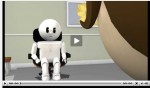
Yes­terday I found a new Xtra­normal video, this one crafted by Dr. Charles of his excellent Exam­ining Room blog, on Dr. Watson and the 7 Qual­ities of an Ideal Physician.

from the Exam­ining Room of Dr. Charles

Dr. Charles cites a 2006 Mayo Clinic Pro­ceedings review on what patients say are essential char­ac­ter­istics of a good physician: The ideal doctor is con­fident, empa­thetic, humane, per­sonal, forth­right, respectful, and thorough. In this clever, short movie crafted by Dr. Charles, the robot-​​​​doctor tries to demon­strate his capa­bility in each of these dimen­sions in his inter­action with a cartoon patient.

I hope the folks over at IBM, who are col­lab­o­rating with real medical

See more A Video About a Robot and a Patient

leave a comment

Sad Stats for Science Knowledge in U.S. Schools

Today’s Times reports on our nation’s stu­dents’ poor science test results. The results are bleak: only 34% of fourth graders scored at a “pro­fi­cient” level or higher; just 30% of eight graders scored at a pro­fi­cient level or higher; 21% of twelfth graders scored at a pro­fi­cient or higher level in science.

The mega-​​​​analysis, pre­pared by the National Center for Edu­cation Sta­tistics, derives from 2009 testing of 156,500 fourth-​​​​graders and 151,100 eighth-​​​​graders, with state-​​​​by-​​​​state and nationwide metrics of those, and of 11,100 twelfth-​​​​graders. Student scores were ranked at one of three science knowledge levels for each peer group: advanced, pro­fi­cient and basic, as defined by the Department of Edu­cation. Only a tiny fraction — as few as 1 or 2% of stu­dents — attained “advanced” scores on the science exams.

The com­plete report card ana­lyzes the data by race, sex, urban vs. rural dis­tricts, private vs. public schools and other

See more Sad Stats for Science Knowledge in U.S. Schools

leave a comment

First Inspection of Google's Anatomy

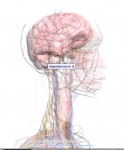
trigeminal nerve, revealed

This morning I toured Google’s new Body Browser. The trip wasn’t as easy as I’d envi­sioned; I got side­tracked on my way, having to update my Web browser before entering. The site requires an advanced Web browser, like Chrome beta or Firefox 4.0, to accom­modate 3-​​D graphics.

Update accom­plished, I forged into Google-woman’s frame. (There is no man available, as yet.)

See more First Inspection of Google’s Anatomy

1 comment, add yours

Stem Cells, Breast Reconstruction and a Magazine Cover

Wired, November 2010 issue

The cover of the November print edition of Wired fea­tures large, unnatural-​​​​appearing cleavage. Inside and toward the back of the issue, a curious article ties together stem cells and the future of breast recon­struction. It got my attention.

Wired, November 2010 issue

The detailed and admit­tedly inter­esting piece, by Sharon Begley, describes what’s science or science fiction: first humans, such as some plastic sur­geons, remove adipose tissue, a.k.a. fat, by a well-​​​​established cos­metic surgery pro­cedure called lipo­suction, from a body part where there’s a fat surplus — such as the belly or backside; next, lab­o­ratory workers purify and grow what are said to be stem cells from that that fat; finally, they use a nifty, cal­i­brated and expensive device to inject those fatty stem cells where women want, such as in a hole or dimpled breast where a tumor’s been removed.

The story starts, unfor­tu­nately and dis­tract­ingly, with a

See more Stem Cells, Breast Recon­struction and a Mag­azine Cover

2 comments, add yours

Five Ways To Improve Breast Cancer Screening by Mammography

As Sue, a woman who’s had breast cancer told me last month: “You don’t want a radi­ol­ogist who’s just looked at someone’s broken foot exam­ining your mam­mogram.” She’s right. Expertise can make a huge dif­ference in clinical outcomes.

See more Five Ways to Improve the Quality and Success of Breast Cancer Screening by Mammography

leave a comment

News on Comparative Effectiveness Research

What is com­par­ative effec­tiveness research and why does it matter? The idea, basi­cally, is to inform medical deci­sions with rel­evant data derived from well-​​designed clinical trials. This sort of research will provide the foun­dation for evidence-​​based med­icine (EBM).

See more News, and Thoughts, on Com­par­ative Effec­tiveness Research

leave a comment

No More Clipboards

“This caught my interest because it doesn’t diminish physi­cians’ autonomy,” Blu­menthal said. It just enables them to make deci­sions for their patients in the context of addi­tional, current infor­mation. “The end goal is not to adopt tech­nology, but to improve care.“

See more No More Clipboards

3 comments, add yours

Big Implications of Blog-​​Bickering About What Doctors Should Be Doing

So while this little debate might seem minor and tech­nical, reflecting some pet­tiness and dis­tinct per­son­al­ities among the various physician-​​bloggers, it bears on a serious issue for med­icine, which is not so easily resolved: what are the tasks that we really want doctors to do, and not to del­egate. This dis­cussion relates to a recent edi­torial in the New York Times on whether we really need physi­cians to admin­ister anesthesia…It bears also on simpler matters — whether doctors should spend time calling patients them­selves about routine test results, adjust coumadin and other drug doses …

See more Big Impli­ca­tions of Blog-​​​​Bickering About What Doctors Should Be Doing

4 comments, add yours

Doctors Not Using Email Like It’s 2010

There’s been a recent barrage of med-​​​​blog posts on the unhappy rela­tionship between doctors and elec­tronic com­mu­ni­ca­tions. The first, a mainly rea­sonable rant by Dr. Wes* dated August 7, When The Doctor’s Always In, con­siders email in the context of unbounded pressure on physi­cians to avail them­selves to their patients 24⁄7. That piece trig­gered at least two prompt reac­tions: Dis­tractible Dr. Rob’s** essay on Why I Don’t Accept eMail From Patients and 33 Charts’ Dr. V on The Bound­aries of Physi­cians Availability.

Perhaps the most aston­ishing aspect of these three guys’ essays is that, in 2010, there’s still a question about whether doctors should use email to com­mu­nicate with patients. It’s hard for me to imagine physi­cians – including bloggers — so dis­con­nected. But many are.

Last year, I had the oppor­tunity to speak with Pro­fessor Nathan Ens­menger, a his­torian of tech­nology at the Uni­versity of Penn­syl­vania who’s studied physicians’

See more Doctors Not Using Email Like It’s 2010