Cautious Optimism for a New Melanoma Treatment
This morning’s news feed delivered some seemingly excellent news for some people with melanoma. At least until now, this form of skin cancer has been considered incurable when metastatic. In the last year, we heard details about the ups and downs of ongoing clinical trials of new drugs to treat the disease.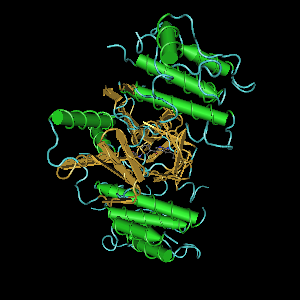
The Times reports that Roche’s experimental drug prolongs life in patients with metastatic melanoma whose tumors have B-Raf mutations. The new findings, based on a randomized phase III, open-label and industry-sponsored trial, BRIM 3, were first communicated in a press release yesterday. The company indicates that the study met its primary endpoints: Patients taking the experimental pill, RG7204, lived longer, and went longer without disease progression, than those patients in the control arm who received standard chemotherapy (dacarbazine) injections every three weeks.
The new drug – a pill usually given at a dose of 960 milligrams twice daily – goes by several names:
RG7204 (Genentech is a Roche subsidiary)
PLX4032 (Plexxikon has a partnership with Roche to commercialize and develop PLX4032)
RO5185426 (as listed at ClinicalTrials.gov and the NCI thesaurus)
Since the Phase III study opened in January 2010, investigators recruited patients at numerous medical centers worldwide. According to the Roche press release, nearly subjects were randomized to receive either the experimental pill (960 mg) twice daily or dacarbazine (1000 mg/m2) by intravenous every 3 weeks. Patients continued on their assigned drug until the disease progressed or they experienced unacceptable toxicity. The most frequent severe adverse events were skin-related, including another, less-aggressive form of skin cancer, and mild, reversible liver abnormalities. The most common reported side effects were rash, joint pain, hair loss and fatigue.
What I can’t find are published details, such as by how long life was prolonged in patients receiving the experimental drug. The NIH Clinical Trials site indicates the investigators aim to recruit 680 patients, and the Times indicates that since the trial opened, 338 patients were assigned to the chemotherapy arm of the trial, while another 338 received the Roche drug.
According to Amy Harmon’s report in the Times:
About half of the 68,000 Americans who develop melanoma every year have a mutation in a gene, called B-RAF, that goes awry, for reasons not well understood, signaling cells to grow uncontrollably. The Roche drug works by blocking a malfunctioning protein the gene produces in cancer cells, but leaving the functioning proteins in noncancerous cells alone.
Roche, in its press release, indicates that: “based on these interim analysis results, patients on the control arm of the study will have the option to crossover to receive RG7204.” The results will be presented formally at a medical meeting this year. (Presumably that would be the annual ASCO gathering in June.)
I’m eager to see the findings, the extent and duration of remissions, degrees of toxicity, and more. This could be another good example of targeted therapy – giving a treatment that’s designed to block a known molecular defect in a tumor – that might dramatically alter the prognosis, and way of life, for some patients with malignant melanoma. But I am cautious in my enthusiasm, as the reports so far, and data interpretation, come from the company that sponsored the clinical trial and would sell the drug if approved.
(all links accessed 1/20/11)
—-
addendum/clarification, Aug 2011: PLX-0432 was renamed vemurafenib.
Leave a Reply