Counterfeit Drugs, A New Concern for Patients
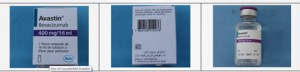
This week the FDA issued an alert about fake Avastin. The real drug is a Genentech-manufactured monoclonal antibody prescribed to some cancer patients. Counterfeit vials were sold and distributed to more than a dozen offices and medical treatment facilities in the U.S. This event, which seems to have affected a small number of patients and practices, should sound a big alarm.
Even the most empowered patient – one who’s read up on his drug regimen, and engaged with his physician about what and how much he wants to receive, and visited several doctors for second opinions and went on-line to discuss treatment options with other patients and possibly some experts – can’t know, for sure, exactly what’s in the bag attached to his IV pole.
Scary because patients are so vulnerable –
The problem is this. If you’re sick and really need care, at some point you have to trust that what you’re getting, whether it’s a dose of an antibiotic, or a hit of radiation to a bone met, or a drug thinner, is what it’s supposed to be. If vials are mislabeled, or machines wrongly calibrated, the error might be impossible to detect until side effects appear. If you’re getting a hoax of a cancer drug in combination with other chemo, and it might or might not work in your case, and its side effects – typically affecting just a small percent of recipients – are in a black box, it could be really hard to know you’re not getting the right stuff.
What this means for providers is that your patients are counting on you to dot the i’s. Be careful. Know your sources. Triple-check everything.
The bigger picture – and this falls into a pattern of a profit motive interfering with good care – is that pharmacists and doctors and nurses need time to do their work carefully. They need to get rest, so that they’re not working robotically, and so that they don’t assume that someone else has already checked what they haven’t. And whoever is buying medications or supplies for a medical center, let’s hope they’re not cutting shady deals.
This issue may be broader than is known, now. The ongoing chemo shortage might make a practice “hungry” for drugs. And with so many uninsured, some patients may seek treatments from less-than-reputable infusion givers. The black market, presumably, includes drugs besides Avastin.
If I were receiving an infusion today, like chemo or anesthesia or an infusion of an antibody for Crohn’s disease, I’d worry a little bit extra. I mean, who will check every single vial and label and box? Think of the average hospital patient, and how much stuff they receive in an ordinary day – including IV fluids that might be contaminated with bacteria.
It’s scary because of the loss of control. This circumstance might be inherent to being a patient – in being a true patient and not a “consumer.”
—
Leave a Reply