BlogWithIntegrity.com
Please subscribe to ML!
Breast Cancer | cancer awareness | cancer treatment | Life in NYC | Oncology (cancer) | Photography | Plastic and Reconstructive Surgery

Visiting the Scar Project Exhibit

On Friday I visited the Scar Project exhibit at Open­house, on Mul­berry Street just south of Spring. Pho­tog­rapher David Jay offers pen­e­trating, large, wall-​​​​mounted images of young people with breast cancer.

The photos reveal women who’ve have had surgery, radi­ation, recon­struction or partial recon­struction of the breasts. Some are strik­ingly beau­tiful. Some appear con­fused, others con­fident. Some look right at you, defiant or maybe proud. Some, post-​​​​mastectomy, adopt frankly or strangely sexual pos­tures. Others hide a breast, or turn away from the lens.

This col­lection is not for everyone. The photos of ravaged bodies of women with cancer might be upsetting, if not frankly dis­turbing, to some who look at them. Not everyone chooses to do so.

The women’s scars and expres­sions are telling. Though not rep­re­sen­tative, these images reflect wounds not often-​​​​shown in medical journals, or elsewhere.

Related Posts:More News On Lymph Nodes and Breast Cancer SurgeryNew NY State Law on Infor­mation for Women Under­going Mas­tec­to­myStudy Finds Wide Vari­ation in Reop­er­ation Rates after Lumpectomy for Breast CancerA Note on the Komen Fiasco1 in 70 Women Develops Breast Cancer Before Reaching 50 Years

Communication | history | Oncology (cancer) | Photography

First Look at the Burns Collection of Early Medical Photographs

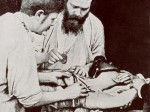
NYC breast surgeons in 1886 Burns_Archive_023_540x405

CBS News has posted a gripping set of images, mostly of cancer patients, dating to the 1880s. The photos from the Burns Archive are graphic, as much as they’re telling, instructive and rare.


This pho­to­graph, taken in New York City in 1886, is one of the ear­liest ever taken of breast surgery. Sur­geons had begun to adopt infection-​​​​control mea­sures in the oper­ating room, but at this point they hadn’t yet adopted the use of sur­gical masks and hats and their sur­gical gowns were simply put on over their street clothes. The anes­the­si­ol­ogist whose hands are visible holding the patient’s arm on the left side of the frame is wearing street clothes. Anes­the­si­ol­o­gists were the last doctors to don sur­gical clothing in the operating room.

Credit: Dr. Stanley B. Burns, via CBS News

According to its website, the Burns Archive houses the nation’s largest and most com­pre­hensive col­lection of

See more First Look at the Burns Col­lection of Early Medical Photographs

Get Adobe Flash player