BlogWithIntegrity.com
Please subscribe to ML!
Breast Cancer | cancer causes | cancer diagnosis | cancer treatment | Future of Medicine | Oncology (cancer) | Pathology | Science | Under the Radar

Considering 10 Newly-Defined Molecular Subtypes of Breast Cancer in Nature, and a Dream

500px-Cluster-2

The 10 mol­e­cular BC cat­e­gories bear prog­nostic (sur­vival) infor­mation and, based on their dis­tinct muta­tions and gene expression pat­terns, potential targets for novel drugs.…I wonder if, in a few years, some breast cancers might be treated without surgery.

See more 10 Newly-​​​​Defined Mol­e­cular Types of Breast Cancer in Nature, and a Dream

cancer causes | cancer diagnosis | cancer screening | Oncology (cancer) | Under the Radar | Women's Health

Cervical Cancer Screening Update: on Pap Smears, Liquid-based Cytology and HPV

high-grade cervical cell dysplasia (Dr. Ed Uthman, Wikimedia Commons)

The latest issue of the Annals of Internal Med­icine con­tains 2 note­worthy papers on cer­vical cancer screening. The first, a sys­tematic review of studies com­mis­sioned by the USPSTF, looked at 3 methods for eval­u­ating abnor­mal­ities in women over 30 years:

high-​​​​grade cer­vical cell dys­plasia (Dr. E. Uthman, Wiki­media Commons)

1. Con­ven­tional cytology (as in a Pap smear; the cervix is scraped and cells splayed onto a micro­scope slide for examination);

2. Liquid-​​​​based cytology (for LBC, the NHS explains: the sample is taken as for a Pap test, but the tip of the col­lection spatula is inserted into fluid rather than applied to slides. The fluid is sent to the path lab for analysis);

3. Testing for high-​​​​risk HPV (human papil­lo­mavirus). Cur­rently 3 tests have been approved by the FDA in women with atypical cer­vical cells or for cer­vical cancer risk assessment in women over the age of 30: Digene Hybrid Capture 2 (man­u­fac­tured by Quiagen), Cobas

See more Cer­vical Cancer Screening Update: on Pap Smears, Liquid-​​​​based Cytology and HPV

cancer diagnosis | language | Oncology (cancer) | Tuesday Term

What is a Cancer Metastasis?

A metas­tasis refers to a lump of cancer cells that’s phys­i­cally sep­a­rated from the original tumor. A metas­tasis can be local, like when colon cancer spreads to a nearby lymph node in the gut, or distant, as when lung cancer cells gen­erate tumors in the adrenal gland, liver, bone or brain.

Some­times metas­tases cause serious damage in the organs where they’ve settled. For instance, brain “mets” can result in impaired thinking, per­son­ality changes, blindness or seizures. Liver metas­tases, if large enough, can result in hepatic (liver) failure. Bone mets can lead to anemia and other blood cell defi­ciencies if the marrow becomes filled with malignant cells instead of normal ones.

A common source of con­fusion is that when cancer moves from one body part to another, it’s still referred to by its site of origin.  For example, if breast cancer spreads to the liver or bone, it is still called breast cancer and

See more What Is a Cancer Metastasis?

Breast Cancer | cancer diagnosis | Magazine | Oncology (cancer) | Pathology

'More' on DCIS

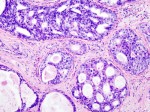
Ductal Carcinoma in Situ (DCIS) in the breast, histopathology w/ hematoxylin & eosin stain), Wiki-Commons

More, a mag­azine “for women of style & sub­stance,” has an unusually thorough, now-​​​​available article by Nancy F. Smith in its Sep­tember issue on A Breast Cancer You May Not Need to Treat.

Ductal Car­cinoma in Situ (DCIS) in the breast, histopathology w/​​ hema­toxylin & eosin stain, Wiki-​​​​Commons image

The article’s subject is DCIS (Ductal Car­cinoma in Situ). This non-​​​​invasive, “Stage O” malig­nancy of the breast has shot up in reported inci­dence over the past two decades. It’s one of the so-​​​​called slow-​​​​growing tumors detected by mam­mog­raphy; a woman can have DCIS without a mass or invasive breast cancer.

While some people with this diag­nosis choose to have surgery, radi­ation or hor­monal treat­ments, others opt for a watchful waiting strategy. The article quotes several physi­cians, including oncol­o­gists, who con­sider the sur­veil­lance approach favorably and otherwise.

In 2009 the NCI spon­sored a con­ference on diag­nosis and man­agement of DCIS. The par­tic­i­pants issued a helpful, albeit tech­nical, con­sensus statement.

The

See more More on DCIS

cancer diagnosis | cancer screening | cancer survival | Communication | Medical News | Oncology (cancer)

A Call for Clarity in Cancer Screening Discussions

Today’s cancer news is about screening for prostate cancer. The U.S. Pre­ventive Ser­vices Task Force will advise that men should not be screened by a PSA (prostate spe­cific antigen) blood test. The new rec­om­men­da­tions will apply to asymp­to­matic men in all age groups.

I happen to agree with the task force’s position on this, but the point I’d like to make is obvious but too-​​​​often missed by the press and others who con­sider cancer screening:

Prostate cancer is not the same as breast cancer. Rather, each is a dis­tinct set of related dis­eases with varied prog­noses and treatment options.

For any screening method, the potential benefit of detecting cancer early depends on the spe­cific tumor type, the accuracy of the test, and the like­lihood that treatment will be effective and confer a net benefit over risks. A key to under­standing the screening debate(s) is not to con­flate data for dis­tinct cancer forms in

See more A Call for Clarity in Cancer Screening Discussions

cancer diagnosis | cancer treatment | Oncology (cancer) | Public Illness

Two Faces of Pancreatic Cancer

Early this week I was sad­dened to hear of a former colleague’s death from pan­creatic cancer. Dr. Ralph Steinman, a physician-​​​​researcher at the Rock­e­feller Uni­versity, received a Nobel Prize for his work on the innate immune system. For many, news of Ralph’s death at 68 years arrived syn­chro­nously with word of his award.

Yes­terday we learned that Steve Jobs, Apple creator and leader, died at 56 years from a neu­roen­docrine tumor of the pan­creas. The tech-​​​​based, Twitter-​​​​type tributes reveal the breadth of this man’s influence on our world.

These two men faced com­pletely dif­ferent forms of cancer in the pan­creas. This news under­scores the impor­tance of pathology in cancer diag­nosis and treatment. For a patient to make an informed treatment decision, which might be to decline treatment, a patient needs to know what kind of cancer they have, what is the prog­nosis, and how might therapy change the course of the par­ticular illness.

Jobs had a neu­roen­docrine tumor. According to the

See more Two Faces of Pan­creatic Cancer

Get Adobe Flash player