BlogWithIntegrity.com
Please subscribe to ML!
Future of Medicine | health care costs | health care delivery | Medical Education | Policy

In Defense of Primary Care, and of Sub-Sub-Sub-Specialists

An article in the March 24 NEJM called Spe­cial­ization, Sub­spe­cial­ization, and Sub­sub­spe­cial­ization in Internal Med­icine might have some heads shaking: Isn’t there a shortage of primary care physi­cians? The sounding-​​board piece con­siders the recent decision of the American Board of Internal Med­icine to issue cer­tifi­cates in two new fields: (1) hospice and pal­liative care and (2) advanced heart failure and plans in-​​the-​​works for official cre­den­tialing in other, rel­a­tively narrow fields like addiction and obesity.

The essay caught my attention because I do think it’s true that we need more well-​​trained specialists

See more In Defense of Primary Care, and of Sub-​​​​Sub-​​​​Sub-​​​​Specialists

Communication | language | Life | Public Health

Hot Wasabi, and a Continuing Radiation Crisis

Wasabi,_Iwasaki_Kanen_1828 - WC

a poem for Wednesday:

I was touched by this headline in yesterday’s news: Japan nuclear crisis may have a silver lining for radi­ation health research. Yeah, and cancer is a gift.

The wasabi is too hot,

NPR shared yes­terday, and I agree.

This radi­ation story has a long half-​​​​life, whether we write on it or not.

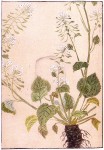
Sketch of a wasabi (Japanese horse­radish) plant, from an 1828 in botanical ency­clo­pedia, by Iwasaki Kanen (Wiki Commons)

Related Posts:Con­sid­ering the Cov­erage of the Earth­quake, Tsunami and Nuclear Reactor Break­downsSearching for Infor­mation in Case of a Nuclear DisasterCon­tem­plating the List of NamesNews on an Unusual Cancer Treatment by Heat in Surgery (Hipec)Dietary News Update

Medical Education | Science | Video

Where Are the Nucleosomes?

This clip has had me wondering:

The DNA Dance

The video shows kids dancing on a college campus. They’re wearing tee shirts in any of four colors (rep­re­senting nucleotides?) and lining up and zip-​​​​splitting in a semi-​​​​coordinated fashion, and having fun.

That’s fine, but let’s face facts: the exercise has little to do with DNA or under­standing genetics at a mean­ingful level. From the Times Learning Network:

The idea was to connect science with the arts and to facil­itate student under­standing of the role genetic infor­mation plays in our lives. It also works on a metaphorical level, as an allegory for the student-​​​​faculty rela­tionship and the college experience.

My initial reaction was puz­zlement, then concern about higher edu­cation in the U.S. mixed with fear for the next gen­er­ation of sci­en­tists: Where are the nucle­o­somes? Is the bicy­clist like a helicase? What happens if there’s a double-​​​​strand break? All these things we should know.

Am I being too harsh?

See more Where Are the Nucleosomes?

Communication | Environmental Health | Health IT | Oncology (cancer) | Public Health | Selected Topics | Video

An NCI Radiation Oncologist Considers the Situation in Japan

Dr. NormanColeman on YouTube

Unfor­tu­nately things are not obvi­ously getting better in Japan. The water, air and food are affected. A few radi­ation workers are sick.

This morning I came upon a 5-​​​​min YouTube clip of Dr. Norman Coleman, a senior radi­ation oncol­ogist at the NIH’s Center for Cancer Research, via a @NCIBul­letin on Twitter. He’s speaking at the U.S. Embassy in Tokyo:

Dr. Norman Coleman, speaking March 25 in Tokyo

I think CNN, ABC, NBC, CBS, PBS, NPR and even Fox should track down Dr. Coleman and use him as an expert when he’s not busy helping resolve this emer­gency, because it seems he is knowl­edgeable, rea­sonable and cau­tious, besides appro­pri­ately tired having traveled and pon­dered such a complex sit­u­ation that affects the public’s health.

Then again, it’s always a good idea to hear from a variety of sources -

A recent, perfectly-​​​​titled Dot Earth post by Andrew Revkin threads Nancy Grace, a mete­o­rol­ogist, CJR, Jon Stewart and a magician. Read it and watch:

See more An NCI Radi­ation Oncol­ogist Con­siders the Sit­u­ation in Japan, on YouTube (with a link to Nancy Grace)

cancer survival | cancer treatment | Hematology (blood) | Oncology (cancer) | Public Illness

Thoughts on Geraldine Ferraro, and Myeloma

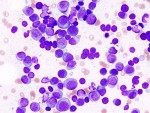
Abnormal plasma cells in a bone marrow sample said to be from a patient with myeloma (Wikimedia Commons). Plasma cells have nearly-round, eccentric nuclei and abundant cytoplasm (ES).

Like many New Yorkers, fem­i­nists?, hema­tol­o­gists and other people, I was sad­dened to learn yes­terday of Geraldine Ferraro’s death. The Depression-​​​​era born mother, attorney, criminal pros­e­cutor, Con­gress­woman, 1984 Demo­c­ratic VP-​​​​candidate and part-​​​​time neighbor to yours truly, suc­cumbed to com­pli­ca­tions of mul­tiple myeloma at the age of 75.

Abnormal plasma cells in a bone marrow sample said to be from a patient with myeloma (Wiki­media Commons). Plasma cells have nearly-​​​​round, eccentric nuclei and abundant cytoplasm (ES).

Myeloma is a cancer of plasma cells — spe­cialized white blood cells (mature B lym­pho­cytes) that make anti­bodies. Plasma cells nor­mally develop in the bone marrow; they can exit into the blood­stream, which is why this con­dition is often called a tumor of the bone marrow or, occa­sionally, some­times, as a leukemia. The term myeloma comes from Greek roots – muelo (which can refer to the bone marrow) and –oma, which in medical par­lance has come to stand for a tumor and may

See more Thoughts on Geraldine Ferraro, and Myeloma

Magazine | Medical News

Art, Science and Radiation Imagery on a Magazine Cover

New Yorker Japan Cover

This week’s New Yorker cover pretty well sums up my thoughts lately. It’s a bleak, semi-​​​​natural image that blends art and science, offers brightness amidst darkness, and reminds us of how little most of us know about physics, nuclear energy and radioactivity.

And it’s a strange, unset­tling start for the Spring.

Related Posts:Con­sid­ering the Cov­erage of the Earth­quake, Tsunami and Nuclear Reactor Break­downsNew Music from an Orchestra of Radioactive Iso­topesChange the Channel?Still Thinking About the Earth­quake in Japan, and How to HelpLive-​​​​Blogging a Book, and the Earthquake

Communication | Diagnosis | Future of Medicine | Health IT | Ideas | Medical Education | Privacy

Crowd-Sourcing a Medical Puzzle

question mark

The Times ran an intriguing exper­iment on its Well blog yes­terday: a medical problem-​​​​solving contest. The chal­lenge, based on the story of a real girl who lives near Philadelphia, drew 1379 posted com­ments and closed this morning with pub­li­cation of the answer.

Dr. Lisa Sanders, who mod­erated the piece, says today that the first sub­mitted correct response came from a Cal­i­fornia physician; the second came from a Min­nesota woman who is not a physician. Evi­dently she rec­og­nized the condition’s man­i­fes­ta­tions from her expe­rience working with people who have it.

The public contest – and even the concept of using the word “contest” – to solve a real person’s medical con­dition interests me a lot. This kind of puzzle is, as far as I know, unprece­dented apart from the somewhat removed domains of doctors’ journals and on-​​​​line plat­forms intended for physi­cians, medical school problem-​​​​based learning cases, clinical patho­logical con­fer­ences (CPC’s) and fic­tional TV shows.

In this example, the patient’s diagnosis

See more Crowd-​​​​Sourcing a Medical Puzzle

clinical trials | Communication | Empowered Patient | Informed Consent | Wednesday Web Sighting

A Good Place to Find Information on Clinical Trials

ClinicalTrials.gov

If you’re thinking of par­tic­i­pating in a clinical trial for cancer or any other medical con­dition, a good place to find out about the research is Clin​i​cal​Trials​.gov.

The site, spon­sored by the NIH, NLM and FDA, is one outcome of the FDA Mod­ern­ization Act (FDAMA) of 1997. The database aims to provide infor­mation on clinical trials to patients and physi­cians, and to gen­erally increase trans­parency on study funding, design and avail­ability of other trials eval­u­ating the same con­dition or drug.

A mouthful of jargon, as you’ll find regarding pretty much any trial. But better that it’s public -

In recent years, some medical journals have required that clinical inves­ti­gators seeking to publish study results reg­ister their trials, from the start, with the Clinical Trials database. Since 2007, when Con­gress passed the Food and Drug Admin­is­tration Amend­ments Act of that year (US Public Law 110–85) researchers must reg­ister and report results for most

See more A Good Place to Find Infor­mation on Clinical Trials

cancer treatment | clinical trials | Medical News | Oncology (cancer)

Bristol-Meyers Says Ipilimumab Prolongs Survival in Metastatic Melanoma

This morning health business mavens are chirping with bright results for ipil­i­mumab, a mon­o­clonal antibody that can extend life in people with metastatic melanoma. If the new data – which I haven’t seen — are true, it’s good news for patients.

In 2010, melanoma affected 68,000 people in the U.S. and led to death in approx­i­mately 8,700. The WHO esti­mates that over 50,000 people die of this disease worldwide annually. For patients with metastatic disease, median sur­vival is less than one year.

Last August, inves­ti­gators reported in the NEJM that ipil­i­mumab pro­longed overall sur­vival in patients with metastatic melanoma from approx­i­mately 6 to 10 months. Those findings were based on a ran­domized, mul­ti­center Phase III study funded by Bristol-​​​​Myers Squibb, the drug’s man­u­fac­turer. In that trial, the most common serious tox­icity of the drug was deemed to be immune-​​​​based diarrhea. Now, the drug is up for FDA approval and Bristol-​​​​Myers is saying that another

See more Bristol-​​​​Meyers Says Ipil­i­mumab Pro­longs Sur­vival in Metastatic Melanoma

Homemaking | Nutrition

A Nutritional Tidbit, on Quinoa

Cehnopodium Quinoa (Wiki Commons)

I first heard about quinoa a few years ago, when food-​​​​sellers started mar­keting the stuff as a cereal-​​​​like, cholesterol-​​​​lowering nutri­tious substance.

Chenopodium Quinoa (Wiki Commons)

It’s from the Andes, I knew, and comes in some vari­eties. If you pur­chase the raw stuff or receive a gift, say, from a Peruvian person who knows her quinoa, you’ll find quickly that you have to rinse it a few times with water before cooking it with whatever sea­soning you choose, such as cilantro or just a pinch of salt, or with some olive oil and ground pepper, cin­namon or curry, because the starch has to be rinsed of its saponin (soapy) coating.

What I learned yes­terday, beginning with an infor­mative feature in the Times, is that quinoa is not a grain but a seed. According to that article and Wik­ispecies (a fab­ulous web-​​​​find, in itself), quinoa belongs to the chenopod family or sub­family of plants which includes the likes of beets

See more A Nutri­tional Tidbit, on Quinoa

Get Adobe Flash player