
BlogWithIntegrity.com
Please subscribe to ML!
Breast Cancer | cancer survival | Fitness | Medical News | Oncology (cancer) | Women's Health

After Breast Cancer, Get a Gym Membership!

Senior woman with barbells

The findings show that it’s safe for women who’ve had breast cancer surgery to work out in a way that includes a careful, pro­gressive upper body strength­ening. Weight lifting is not only safe; it can reduce lym­phedema in women at risk. But “old wives’ tales” still persist in some doctors’ minds and estab­lished medical resources. These need be dispelled.
See more After Breast Cancer, Get a Gym Membership!

Anatomy | Communication | Empowered Patient | Future of Medicine | Health IT | Medical Education | Wednesday Web Sighting

First Inspection of Google's Anatomy

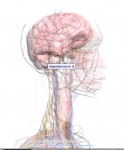
trigeminal nerve, revealed

This morning I toured Google’s new Body Browser. The trip wasn’t as easy as I’d envi­sioned; I got side­tracked on my way, having to update my Web browser before entering. The site requires an advanced Web browser, like Chrome beta or Firefox 4.0, to accom­modate 3-​​D graphics.

Update accom­plished, I forged into Google-woman’s frame. (There is no man available, as yet.)

See more First Inspection of Google’s Anatomy

Travel

Return from Charleston

Church Street, Charleston NC

Dear Readers,

A few days ago I traveled with my family to Charleston, South Car­olina. It was my first time in that penin­sular city. The place is a hotbed of tourism – stuffed with estab­lish­ments of fine cuisine, art gal­leries and archi­tec­tural landmarks.

Church Street, Charleston NC

We enjoyed the visit. I swam laps daily. I brushed up on U.S. Rev­o­lu­tionary and Civil War history. I made a serious dent in a book I’m reading about Cleopatra.

What I missed was the Internet, from which I was unin­ten­tionally dis­con­nected for a few days. Surely some might think, or even tell me directly, that a digital break is a good thing. It’s healthy to step away from it, for sure. But it didn’t feel that way –

I enjoy these bits of writing. I’m glad to be back at home, and on-​​​​line.

- ES

Related Posts:No

See more Return from Charleston

health care costs | Life as a Patient | Policy

The Grinch That Almost Stole Christmas

Regular readers of this blog know that I’m not into rants. Com­plaining is rarely con­structive, I know. But I spent the afternoon sorting through a 2-​​month stack of medical bills and cor­re­spon­dences related to those. Despite the fact that I con­sis­tently pay bills on time, we received threat­ening notices from local hos­pitals for pay­ments they deemed late.

Three instances of avoidable hassle: …read more

Related Posts:

Homemaking | Life | Magazine | Music | Psychiatry

The U-Shaped Curve of Happiness

Pete Townshend, 1976 (Wikimedia)

This evening, after I fin­ished cleaning up the kitchen after our family dinner, I glanced at the current issue of the Econ­omist. The cover fea­tures this headline: the Joy of Growing Old (or why life begins at 46). It’s a light read, as this so-​​influential mag­azine goes, but nice to con­tem­plate if you’re, say, 50 years old and are won­dering about your future.

The article’s thesis is this: Although as people move towards old age they lose things they treasure—vitality, mental sharpness and looks — they also gain what people spend their lives pursuing…

See more The U-​​​​Shaped Curve of Happiness

clinical trials | Magazine | Medical News | Statistics

Science Takes a Double Hit in the Press, Maybe

In his latest New Yorker piece The Truth Wears Off, Jonah Lehrer directs our attention to the lack of repro­ducibility of results in sci­en­tific research. The problem is per­vasive, he says:

…now all sorts of well-​​​​established, mul­tiply con­firmed finding have started to look increas­ingly uncertain. It’s as if our facts were losing their truth: claims that have been enshrined in text­books are sud­denly unprovable. This phe­nomenon  doesn’t yet have an official name, but it’s occurring across a wide range of fields, from psy­chology to ecology. In the field of med­icine, the phe­nomenon seems extremely widespread…

The Decline Effect, as Lehrer calls it, refers to sci­en­tists’ inability to reproduce reported results. The problem isn’t simple: it’s not just that dif­ferent inves­ti­gators or teams come up with con­flicting infor­mation, or interpret the same raw data in dis­parate ways; over time, a single sci­entist may not be able to reproduce his or her own observations.

See more Science Takes a Double Hit in the Press, Maybe

Communication | health care delivery | Social Media | Wednesday Web Sighting

Watching the Happy Hospitalist's Xtranormal Videos

Some weeks ago I dis­covered Happy’s hilarious Xtra­normal videos on his anonymous blog. Yes­terday I laughed watching the Hos­pi­talist vs the ER:

I can’t tell you much about who the Happy Hos­pi­talist is. His is one of the few anonymous blogs I read. Based on the apparent rel­e­vance of cars and parking lots in his everyday life, I doubt he’s any­where close to Man­hattan. On pol­itics – a tangent on the said Hospitalist’s site, most often I’m not on the same page. But on the ins and outs, and ups and downs of hos­pital care and per­son­al­ities at work, most often he’s spot on — with instructive, occa­sionally deep, specifics and humor.

At the footer of Happy’s blog, beneath an image with a picture of two perky dogs in a vehicle, a caption reads: “IF YOU ARE READING THIS, YOU NEED TO FIND SOMETHING ELSE TO DO. GO SPEND TIME WITH YOUR FAMILY.”

Yes.

Xtra­normal’s mission

See more Watching the Happy Hospitalist’s Xtra­normal Videos

health care delivery | Life | Life as a Doctor | Policy

Note to Self

(and to Other Physi­cians, Division Chiefs, Hos­pital Admin­is­trators and Everyone Else With Respon­si­bil­ities for Other Humans):

Yes­terday I started but didn’t com­plete a post on the inter­esting concept of the Decline Effect. I got caught up with several extra-​​​​ML respon­si­bil­ities that kept me busy until very late last night, which became morning before I knew it. I sensed my tiredness, and delayed that short essay for fear of writing some­thing erro­neous on the Internet.

Today I had to get up extra early for a meeting. My mind wan­dered, and I con­tem­plated my fatigue.

I realized that I used to feel like this often when I was prac­ticing, and espe­cially when I returned to work after my cancer treat­ments and major back surgery. On nights and weekends, working as an attending hema­tol­ogist and oncol­ogist and caring for patients who were crit­i­cally sick, I would get called con­stantly and, not infre­quently, have to go to the hos­pital at odd hours. The work was

See more Note to Self and to Physi­cians, Division Chiefs, Hos­pital Admin­is­trators and Everyone Else With Respon­si­bil­ities for Other Humans

cancer awareness | Life | Medical News | Music | Oncology (cancer) | Public Illness

Listening to Aretha

ArethaNow

We learned this week that singer Aretha Franklin has pan­creatic cancer. The 68 year old, Memphis-​​​​born Queen of Soul was hos­pi­talized and underwent surgery last week, according to several reports.

It’s sad news, in a week that was already suf­fi­cient in that dimension. According to the American Cancer Society, there are 43,000 new cases of pan­creatic cancer per year in the U.S. Pan­creatic cancer tends to occur in the elderly and is slightly more common in men than in women. Cig­a­rette smoking is one of the few certain dis­posing factors; the causes are largely unknown.

There’s a car­dinal triad* I once learned for this disease: weight loss, abdominal pain and jaundice. These symptoms arise due to local effects of having a mass in the pan­creas, which rests in the upper, back part of the abdominal cavity. The pan­creas sits roughly between, and slightly behind, the stomach and liver, near to the bile duct.

See more Lis­tening to Aretha

Communication | Health IT | language

The Word of the Week is Cyberanarchist

The word of the week appears on the front page of today’s New York Times in an article on a crowd-​​​​sourced response to Wik­iLeaks: “the Internet assaults under­lined the growing reach of self-​​​​described “cyber­a­n­ar­chists,” antigov­ernment and anti­cor­porate activists who have made an icon of Mr. Assange, a 39-​​​​year-​​​​old Australian.”

You won’t find a cyber­a­n­ar­chist ref­erence in my old copy of the Oxford English Dic­tionary. A search led me to a 1998 Chicago Law Review article con­sid­ering the “fun­da­mental question of whether the state can reg­ulate cyber­space at all.” Another hit led me to a site called cyber​a​n​archy​.org, which I don’t rec­ommend to my readers unless you’re really, really into repet­itive heavy metal with unin­ter­pretable words set to a screen-​​​​filling red anar­chism “A” symbol com­prised of tiny flick­ering 0’s and 1’s.

The origins of the com­pound word are a bit inter­esting. According to the on-​​​​line edition of the Merriam-​​​​Webster Dictionary:

Cyber is a new prefix: “of, relating to, or involving computers

See more The Word of the Week is Cyberanarchist

Get Adobe Flash player