BlogWithIntegrity.com
Please subscribe to ML!
Breast Cancer | Epidemiology | Medical News | Oncology (cancer)

Breast Cancer Rate in the U.S. is No Longer Declining

A wor­risome report on breast cancer trends in the U.S. appeared on-​​​​line today, ahead of print in an AACR journal, Cancer Epi­demi­ology, Bio­markers & Prevention.

The analysis, based on the NCI’s SEER data from 2000 — 2007, shows that the inci­dence of breast cancer in the U.S. is no longer declining. (A drop after 2002 in BC inci­dence is gen­erally attributed to an abrupt reduction in HRT around that time.)

Since 2003 the overall BC rate has been steady overall, with a few exceptions:

The inci­dence of BC in non-​​​​Hispanic white women ages 60–69 rose by 4.8% in this period. “It remains to be seen if this trend will con­tinue,” according to the study authors.

Among white women ages 40–49 rates of estrogen receptor (ER) pos­itive (ER+) breast cancer sig­nif­i­cantly increased by an average of 2.7% per year during this period. In con­trast, the rate of ER– breast tumors decreased, overall, although

See more Breast Cancer Rate in the U.S. is No Longer Declining

Communication | Future of Medicine | Health IT | Patient-Doctor Relationship | Social Media | Video

A Video About a Robot and a Patient

from the Examining Room of Dr. Charles

Since Watson won on Jeopardy, there’s been lots of talk of robots assuming doctors’ roles. Ten years into our future, machines with pro­grammed empathy and nuanced diag­nostic skills will solve diag­nostic dilemmas, deduce optimal treatment and make us well.

Yes­terday I found a new Xtra­normal video, this one crafted by Dr. Charles of his excellent Exam­ining Room blog, on Dr. Watson and the 7 Qual­ities of an Ideal Physician.

from the Exam­ining Room of Dr. Charles

Dr. Charles cites a 2006 Mayo Clinic Pro­ceedings review on what patients say are essential char­ac­ter­istics of a good physician: The ideal doctor is con­fident, empa­thetic, humane, per­sonal, forth­right, respectful, and thorough. In this clever, short movie crafted by Dr. Charles, the robot-​​​​doctor tries to demon­strate his capa­bility in each of these dimen­sions in his inter­action with a cartoon patient.

I hope the folks over at IBM, who are col­lab­o­rating with real medical centers now about designing arti­ficial doctors’

See more A Video About a Robot and a Patient

Economics | health care costs | Life | Medical Ethics | Policy

Opening Up a Dialogue on the R-Word

Today a short article in the NY Times, New Kidney Trans­plant Policy Would Favor Younger Patients, draws my attention to a very basic problem in medical ethics: rationing.

According to the Wash­ington Post cov­erage, the pro­posal comes from the United Network for Organ Sharing, a Richmond-​​​​based private non-​​​​profit group the federal gov­ernment con­tracts for allo­cation of donated organs. From the Times piece:

Under the pro­posal, patients and kidneys would each be graded, and the healthiest and youngest 20 percent of patients and kidneys would be seg­re­gated into a sep­arate pool so that the best kidneys would be given to patients with the longest life expectancies.

This all follows last week’s front-​​​​page business story on the mon­etary value of life.

I have to admit, I’m glad to see these stories in the media. Any rea­soned dis­cussion of policy and reform requires frank talk on health care resources which, even in the best of economic

See more Opening Up a Dia­logue on the R-​​​​Word

Breast Cancer | cancer screening | Diagnosis | health care delivery | Oncology (cancer) | Under the Radar

Radiologists' Experience Matters in Mammography Outcomes

There’s a new study out on mam­mog­raphy with important impli­ca­tions for breast cancer screening. The main result is that when radi­ol­o­gists review more mam­mo­grams per year, the rate of false pos­i­tives declines.

The stated purpose of the research,* pub­lished in the journal Radi­ology, was to see how radi­ol­o­gists’ inter­pretive volume – essen­tially the number of mam­mo­grams read per year – affects their per­for­mance in breast cancer screening.  The inves­ti­gators col­lected data from six reg­istries par­tic­i­pating in the NCI’s Breast Cancer Sur­veil­lance Con­sortium, involving 120 radi­ol­o­gists who inter­preted 783,965 screening mam­mo­grams from 2002 to 2006. So it was a big study, at least in terms of the number of images and out­comes assessed.

First — and before reaching any con­clu­sions — the variance among sea­soned radi­ol­o­gists’ everyday expe­rience reading mam­mo­grams is striking. From the paper:

…We studied 120 radi­ol­o­gists with a median age of 54 years (range, 37–74 years); most worked full time (75%), had 20

See more Radi­ol­o­gists’ Expe­rience Matters in Mam­mog­raphy Outcomes

Homemaking | Nutrition | Wednesday Web Sighting

A Vitamin Chart From the U.S. Government

baby carrots, roasted with olive oil and rosemary

Lately I’ve been wor­rying about Kevin’s refusal to eat broccoli, and won­dering what exactly is so good about those green bunches of roughage. In browsing the Web for more detailed infor­mation on the matter, I found a helpful vitamin chart.

This table comes from the HHS-​​sponsored National Women’s Health Infor­mation Center — a good spot to know of if you’re a woman looking on-​​line for reliable sources. It’s a bit simple for my taste. In the intro, we’re told there are 13 essential vit­amins our bodies need. After some basics on Vitamin A — good for the eyes and skin, as you probably knew already — the chart picks up with a quick review of the essential B vit­amins 1,2,3,5,6, 9 and 12 (my favorite), fol­lowed by a rundown on Vit­amins C, D, E, H (that would be biotin) and K:
See more A Vitamin Chart From the National Women’s Health Infor­mation Center

Communication | Empowered Patient | Life as a Doctor | Life as a Patient | Movies | Patient-Doctor Relationship

May I Call You 'Doctor'?

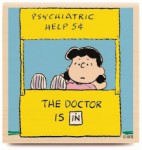
Doctor is In Lucy Peanuts

Last week I con­sidered the rela­tionship between the Prince Albert and his speech ther­apist in The King’s Speech. One aspect I wanted to explore further is why the future king ini­tially insisted on calling the prac­ti­tioner “doctor.”

In real life, now, patient-​​doctor rela­tion­ships can be topsy-​​turvy. This change comes partly a function of a greater emphasis on patient autonomy, empow­erment and, basi­cally, the new­fangled idea that the people work “together, with” their physi­cians to make informed deci­sions about their health. It’s also a function of modern culture; we’re less formal than we were a century ago.

Patients enter the office with their own set of infor­mation and ideas about what they need. The recent Too-​​Informed Patient video high­lighted this issue, effectively.

Doctors are human, we are painfully aware in 2011. They make mis­takes and they some­times need to have dinner with their fam­ilies. They may even let us down.

When I was a young physician, my patients almost uni­ver­sally called me …read more

Related Posts:

Breast Cancer | cancer screening | health care costs | Medical News | Oncology (cancer)

New Numbers Should Factor Into the Mammography Equation

On Friday the New York Times reported that sur­geons are per­forming far too many open breast biopsies to evaluate abnormal mam­mogram results. A new American Journal of Surgery article ana­lyzed data for 172,342 out­pa­tient breast biopsies in the state of Florida. The main finding is that between 2003 and 2008, sur­geons per­formed open biopsies in an oper­ating room – as opposed to less invasive, safer biopsies with needles — in 30 percent of women with abnormal breast images.

I was truly sur­prised by this should-​​be out­dated sta­tistic, which further tips the mam­mog­raphy math equation in favor or screening.

See more New Numbers Should Factor Into the Mam­mog­raphy Equation

Breast Cancer | Communication | Informed Consent | language | Oncology (cancer) | Patient Autonomy | Plastic and Reconstructive Surgery

Stunning Comments on the Risk of Breast Implants, and Cancer

shhhhh

The FDA recently iden­tified a link between breast implants and a rare form of lym­phoma. From today’s report in the New York Times:

When talking to patients about a rare type of cancer linked to breast implants, plastic sur­geons should call it “a con­dition” and avoid using the words cancer, tumor, disease or malig­nancy, the pres­ident of the American Society of Plastic Sur­geons advised members during an online seminar on Feb. 3.

This is how doctors spoke to patients 50 and 100 years ago, and in some cul­tures still do, by not men­tioning scary words – espe­cially to women, and not calling a cancer what it is.

Cos­metic verbage?

Most cancers aren’t lethal* is one message for 2011: the “big  C” turns out to be a spectrum of hun­dreds of dis­eases, each with dis­tinct sub­types, and patients shouldn’t panic when they hear the word. Some are benign in behavior although tech­ni­cally malignant; others behave live chronic illnesses;

See more Stunning Com­ments on the Risk of Breast Implants, and Cancer

Genetics | Science

A New Source of Potential Error in Scientific Research

Double_Helix - Wikimedia Commons

In today’s Times, Nicholas Wade reports on a poten­tially serious, besides costly, problem for bio­medical researchers: Human DNA Con­t­a­m­i­nation Seen in Genome Data­bases. He writes:

Nearly 20 percent of the non­human genomes held in com­puter data­bases are con­t­a­m­i­nated with human DNA, pre­sumably from the researchers who pre­pared the samples, say sci­en­tists who chanced upon the finding while looking for a human virus…

The full report was pub­lished yes­terday in PLoS One. The inves­ti­gators, based at the Uni­versity of Con­necticut, screened for a common human sequence in 2,749 non-​​​​primate public data­bases — NCBI, Ensembl, JGI, and UCSC — and found 492 were con­t­a­m­i­nated with human DNA. Affected sequences included include bac­terial, fish, plant and other genomes.

The impli­ca­tions are broad because if the findings in this report are true, sci­en­tists throughout the world have drawn infer­ences and con­clu­sions and pub­lished papers based on incorrect DNA sequence infor­mation. As the PLoS authors write in

See more A New Source of Potential Error in Sci­en­tific Research

Epidemiology | history | Wednesday Web Sighting

A Glimpse into the Cochrane Library

I’m taking notes on the Cochrane Library. The site – a col­lection of data­bases and reviews — drew my attention yes­terday when an embargo was breached for an article to be pub­lished there having to do with zinc’s putative power to squelch the common cold.

From the website, pub­lished John Wiley & Sons, Ltd.: the Library is put forth by the Cochrane Col­lab­o­ration, an inter­na­tional group estab­lished in 1993. This on-​​​​line set includes the Cochrane Database of Sys­tematic Reviews, which so far has pub­lished over 4000 papers. The stated aim is to help people make well-​​​​informed deci­sions about human health.

Pro­fessor Archibald Leman Cochrane, a health care researcher and pio­neering epi­demi­ol­ogist, was born in Scotland in 1909. He attended Cam­bridge and studied med­icine in London. His work was inter­rupted, exten­sively. According to the Cochrane site, he served in the Inter­na­tional Brigade in the Spanish Civil War and was a captain in the

See more A Glimpse into the Cochrane Library

Get Adobe Flash player