|
|
By Elaine Schattner, MD, on February 17th, 2012
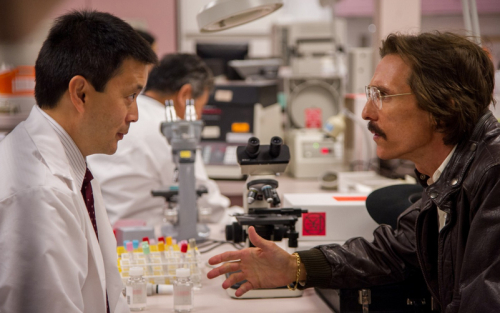
 The movie, based in part on the true story of scriptwriter Will Reiser, surprised me by its candor. Actor Joseph Gordon-Levitt smoothly portrays Adam Lerner, who soon finds out he has cancer. The opening scene
See more 50–50, A Serious Film About a Young Man With a Rare Cancer
By Elaine Schattner, MD, on January 30th, 2012
 image, “the Iron Lady”
Over the weekend I saw the Iron Lady, a movie about Margaret Thatcher, the former Prime Minister of England. I expected a top-notch, accented and nuanced performance by Meryl Streep, and got that.
The film surprised me in several respects. It’s really about aging, and how a fiercely independent woman withers. The camera takes you within her elderly, blurry, husband-conjuring mind. She’s forgetful and rambling, but maintains an interest in current events, and ideas. She looks back on events in her life with pride and, seemingly, some regrets.
Well done, worth seeing!
— Advertisements:
Related Posts:Another Take On An Ordinary DayThe “Survivor” Term After Breast Cancer: Is There a Better Expression?Harsh Words, and Women’s Health at Risk50–50, A Serious Film About a Young Man With a Rare CancerKomen Update –
See more The Iron Lady, a Film About an Aging Woman
By Elaine Schattner, MD, on September 27th, 2011
 I finally caught Contagion, a week or so after the movie spread to theaters throughout the country. After so much talk about the film’s scientific grounding, or not, I wasn’t sure what to expect of a film on such a scary and medically intense subject. And with so many star actors, and being directed by Steven Soderbergh, the work was bound to disappoint this doctor-writer-viewer.
The imaginary scare, grounded in science, offers little pleasure. I didn’t enjoy watching it much.
Still, there’s value in disseminating information on how germs spread. Other, expert writers have already covered ID aspects of the film, like details on a hybrid bat-pig virus infecting humans.
I might complain about the absurd blogger-villain, but let’s just say he’s not worth it.
My favorite scene is contained within the official movie’s trailer. In it, we see Matt Damon portraying the husband of a woman (Gwyneth Paltrow) who’s just returned from a business trip in Hong Kong with a cough and lethal virus.
See more In Shock, and Not Hearing What the Doctor Says in ‘Contagion’
By Elaine Schattner, MD, on September 8th, 2011
 the character Celia, in “The Help”
Last weekend I saw The Help, a movie on race relations in Jackson, Mississippi 50 years ago with lingering implications for people who hire “help” to take care of their children and tend to their personal business anywhere in the world, including now. It’s a heavy-handed, simple-message and nonetheless very enjoyable film, with fine acting and imagery, based on the book of the same title by Katherine Stockett.
One element of the narrative interested me from the medical perspective, having to do with the plight of a pale, thin and sexy young woman who’s marginalized by the white Jackson social elite. The character Celia, portrayed with flair by Jessica Chastain, lives, isolated, on an out-of-town plantation. She spends her days alone while her husband’s at work. The nominally proper women in town, while playing bridge and otherwise gathering, call her “white trash,” and she sometimes lives up to
See more Medical Aspects of ‘The Help’: The Plight of a Woman with Recurrent Miscarriages
By Elaine Schattner, MD, on February 22nd, 2011
 Last week I considered the relationship between the Prince Albert and his speech therapist in The King’s Speech. One aspect I wanted to explore further is why the future king initially insisted on calling the practitioner “doctor.”
In real life, now, patient-doctor relationships can be topsy-turvy. This change comes partly a function of a greater emphasis on patient autonomy, empowerment and, basically, the newfangled idea that the people work “together, with” their physicians to make informed decisions about their health. It’s also a function of modern culture; we’re less formal than we were a century ago.
Patients enter the office with their own set of information and ideas about what they need. The recent Too-Informed Patient video highlighted this issue, effectively.
Doctors are human, we are painfully aware in 2011. They make mistakes and they sometimes need to have dinner with their families. They may even let us down.
When I was a young physician, my patients almost universally called me …read more
Related Posts:
By Elaine Schattner, MD, on February 14th, 2011
 Over the weekend I went to see the King’s Speech. So far the film, featuring Colin Firth as a soon-to-be-King-of-England with a speech impediment, and Geoffrey Rush as his ill-credentialed but trusted speech therapist, has earned top critics’ awards and 12 Oscar nominations. This is a movie that’s hard not to like for one reason or another, at least most of the way through. It uplifts; it draws on history; it depends on solid acting.
What I liked best, though, is the work’s rare depiction of a complex relationship between two imperfect, brave and dedicated men. At some level, this is a movie about guys who communicate without fixating on cars, football (either kind) or women’s physical features. Great! and, dear Hollywood moguls, can we have some more like this, please?
The film’s medical aspects are four, at least: the stuttering, the attitude of physicians toward smoking, a closeted sibling who had epilepsy and died at an
See more The King’s Speech is Not Just About Stuttering
By Elaine Schattner M.D., on February 8th, 2010
 This is my first film review, if it is that. I was tempted to write about Ethan Hawke, hematologist among vampires in Daybreakers, but gore’s not my favorite genre. A mainstream choice would have been Harrison Ford solving the enzyme deficiency of Pompe disease in Extraordinary Measures, but I didn’t get sucked in. I chose Precious, instead. This luminous movie relates to the practice of medicine everyday, big-time.

See more On Precious
By Elaine Schattner M.D., on January 23rd, 2010
January, the coldest season in my vicinity, turns out to be National Blood Donor Month. This designation, a legacy of the Nixon administration (Proclamation 3952, Dec 31, 1969), I learned last week. Besides, blood’s hot.
See more Blood Matters
By Elaine Schattner M.D., on December 3rd, 2009
“Well, well” says the convenience store clerk. “Back for another test?“
“I think the first one was defective. The plus sign looks more like a division symbol, so I remain unconvinced,” states Juno the pregnant teenager.
“Third test today, mama-bear,” notes the clerk.
…“There it is. The little pink plus sign is so unholy,” Juno responds.
She’s pregnant, clearly, and she knows she is. (see clip from Juno the movie*)
Think of how a statistician might consider Juno’s predicament…
See more On Juno and Screening Test Stats
|
|