|
|
By Elaine Schattner, MD, on April 29th, 2011
A short post for Friday:
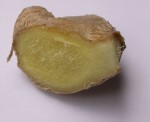
The Times published a short piece on ginger this Tuesday, on whether or not it relieves morning sickness. The conclusion is that it’s less effective for nausea in pregnancy than in seasickness and chemotherapy treatment.
When I was getting chemo, I received a gift of ginger tea. It didn’t help at all. Now, if I even sniff that stuff, I want to throw up.
Curiously, I have no problems with ginger in food. I use the fresh ingredient all the time.
No explanation -
—
Related Posts:On Genetics, News, Cancer, and Educating DoctorsHow Much Do You Want Your Doctors To Say About Risks of Treatment?Oh, No Methotrexate!A Good Outcome from Celebrity Chef Paula Deen’s Message about Diabetes?More on DCIS
By Elaine Schattner, MD, on April 28th, 2011 This post, on my research in cancer immunology, is strangely personal.
At one level, what follows is nothing more than a list, a narrative if you will, a sketch of a formative chunk of my career and personal history. I’ve wanted to put this out there (here) for quite a while, but couldn’t: It’s been hard for me, harder in some ways than was the breast cancer and spine surgery and all the other unpleasant illnesses I haven’t mentioned yet, to come to grips with my near-hit academic medial research career that stopped, which until today has been for the most part disconnected from this blog and my new on-line life.
So here goes, a partial list of my publications, selected from ~30:
—
On a novel mechanism for B-cell death, my first first-author article based on my research in lymphoma immunology, in The Journal of Experimental Medicine, 1995:
CD40
See more Some Articles I Authored A While Ago
By Elaine Schattner, MD, on April 27th, 2011
A surprise lesson arrived in my snail mailbox today: the April 28 issue of NEJM includes a fascinating research paper on a probable cause of leprosy in the southern U.S. New, detailed genetic studies show that armadillos, long-known to harbor the disease, carry the same strain as occurs in some patients; they’re a likely culprit in some cases.
Dr. Gerhard Henrik Armauer Hansen, who identified the bacteria causing leprosy
For those who didn’t go to med school: Leprosy is a chronic, infectious disease cause by Mycobacterium leprae. In my second year we were told to refer to the illness as Hansen’s disease. We learned that some people are more susceptible to it than others, possibly due to inherited immunological differences, a point that is reiterated in the current article.
The World Health Organization reports there are under 250,000 cases worldwide every year. Here in the U.S., Hansen’s disease is
See more New Findings on Leprosy and Armadillos
By Elaine Schattner, MD, on April 26th, 2011
Today Scientific American shared this bit from its 50-year archive, by the mathematician Sherman K. Stein, recounting an interview with the composer George Perle on a theory of rhythm developed in India over 1000 years ago:
While reading about this theory,’ he said, ‘I learned my one and only Sanskrit word: yamátárájabhánasalagám.’ I asked him what it meant. ‘It’s just a nonsense word invented as a memory aid for Indian drummers.… As you pronounce the word you sweep out all possible triplets of short and long beats.’
Sounds like onomatopoeia, or something similar in ancient Indian music parlance. But I’m no drummer, and I don’t know Sanskrit.
It’s got me wondering about the thousands of ancient, hard-to-spell-or-say terms, not rooted in Greek or Latin, for complex medical conditions doctors use today, about which we have so little knowledge.
—
Related Posts:Reading and Hearing ‘Bang the Drum Slowly’How Much Do You Want Your Doctors To Say About Risks of Treatment?I Hope My Doctors Aren’t Blogging Too MuchDo Adults Need Physicians to Tell Them to Exercise?Cyberchondria Rising – What is the Term’s Meaning and History?
By Elaine Schattner, MD, on April 25th, 2011
(and, on bias in education)
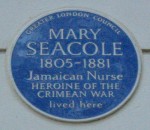
On the bus last week I was reading the latest New Yorker and came upon a short, front-end piece by Ian Frazier on Mary Jane Seacole, a Jamaican nurse who tended wounded soldiers in the Crimean War. As best as I can recall, I’d never heard before of Florence Nightingale’s colleague.
Wiki Commons image
From Two Nurses:
Florence Nightingale strongly disapproved of Mary Jane Seacole, but that did not stop either of them. The former invented the profession of nursing and became famous for her work on the battlefields of the Crimean War. The latter grew up in Jamaica, knew native remedies learned from her Jamaican mother…supported herself by selling jams, pickles, and spices after her husband’s death, travelled widely, and offered to nurse soldiers in the Crimean War with Nightingale. Turned down, Mary Seacole went to the Crimea anyway. She paid
See more Who Was Nurse Mary Jane Seacole?
By Elaine Schattner, MD, on April 21st, 2011 The author has been concerned for a while that she might be addicted to blogging. Symptoms include wanting to post instead of working on a book proposal and other, likely more important projects. She was thinking of crowd-sourcing how best to describe this disposition, but it turns out the Internet already provides a diagnostic term:
Blogging Addiction Disorder, a.k.a. BAD, a possible variant of Internet Addiction Disorder.
That’s enough for today. (NTW, I’ll get back to work now.)
–
Related Posts:Shoutout: A Website with a Directory of Cancer BlogsOn Media Snobs and Darwinism in the BlogosphereShould People With Health Problems Talk About their Conditions?Boobstagram Collects and Displays Breast Photos, Says Aim is to Boost Cancer AwarenessA Note on ‘Trial by Twitter’ and Peer Review in 2012
By Elaine Schattner, MD, on April 20th, 2011 A few days ago I read that Dr. Lazar Greenfield, Professor Emeritus at the University of Michigan, resigned as the president-elect of the American College of Surgeons over flak for authoring a Valentine’s Day-pegged, tacky, tasteless and sexist piece in Surgery News. The February issue is mysteriously absent in the pdf-ied archives. According to the Times coverage: “The editorial cited research that found that female college students who had had unprotected sex were less depressed than those whose partners used condoms.
From Pauline Chen, also in the Times:
It begins with a reference to the mating behaviors of fruit flies, then goes on to discuss studies on the menstrual cycles of heterosexual and lesbian women who live together. Citing the research of evolutionary psychologists at the State University of New York, it describes how female college students who had been exposed to semen were less depressed than their peers who
See more Dr. Greenfield is Human
By Elaine Schattner, MD, on April 18th, 2011 There’s so much medical stuff I’d like to write on today. The thing is, it’s almost Passover. I’ve just got a few hours to finish readying our home for the holiday.
And so this will be the topic for today’s ML, on home-making:
Part of the Passover preparation is, in my mind, like spring cleaning: we scrub surfaces in the kitchen, pantry and elsewhere; we shake out all the rugs and vacuum or sweep extra carefully; we go through old foods and decide what’s worth keeping or should be discarded. We remove all bits of bread, and then set a minor flame (I use a match) to, symbolically and really, burn the last crumb.
I’m reminded of the spring of 1987, when I spent the second half of Passover in a small apartment in Cochabamba, Bolivia, where I followed an endocrinologist in his rounds and learned about so-called tropical diseases:
See more Passover Preparations, and Good Housekeeping
By Elaine Schattner, MD, on April 17th, 2011 The author learned a new word this weekend while attending the annual meeting of the Association of Health Care Journalists in Philadelphia.
In a richly-informative session on ethics of clinical trials, one of the speakers, Dr. Jason Karlawish — a bioethicist, geriatrician and Alzheimer’s researcher at the University of Pennsylvania, taught me a new term: theranostic (alt. spelling: theragnostic).
The neologism calculatingly brings together the concepts of medical therapy and diagnosis. This goes beyond biomarkers, he explained; theranostics are novel tests or diagnostic markers that would identify patients who, as defined, benefit from a particular therapy.
The first international conference on theranostics will be held in June, he told the audience.
—
Related Posts:News on Niaspan, Cholesterol Drugs and BiomarkersReview: Dr. Eric Topol’s Creative Destruction of MedicineNIH Sponsors New Website to Help Patients Understand Clinical TrialsNEJM Reports on 2 New Drugs for Hepatitis CWhat is the Disease Control Rate in Oncology?
By Elaine Schattner, MD, on April 12th, 2011
Today Ed Silverman of Pharmalot considers the case of a ghost-written medical text’s mysterious disappearance. The 1999 book, “Recognition and Treatment of Psychiatric Disorders: A Psychopharmacology Handbook for Primary Care,” (reviewed in a psychiatry journal here) came under scrutiny last fall when it became evident that the physician “authors” didn’t just receive money from a relevant drug maker, SmithKline Beecham; they received an outline and text for the book from pharmaceutical company-hired writers.
poster for the X-Files
The book is no longer evident at the website for STI (Scientific Therapeutic Information), the company that provided authorship “help.” I tried to get a copy on Amazon.com, where it’s said to be temporarily out-of-stock. The work remains listed in the Library of Congress on-line catalog: #99015420.
I’m reminded of clinical handbooks I used all the time when I was practicing hematology and oncology. At the hospital, I’d get freebie,
See more Internet-Based Medical Information May Prove More Trustworthy Than Printed Texts
|
|
connections…