Blog

A Walk, or Race, for the Cure

“You can get discomboobulated in this place,” a NYC police officer told me today.

This morning, some 25,000 or so men, women and children converged on Central Park for the Susan G. Komen Foundation’s 20th annual Race for the Cure. It was my first time witnessing the event:
Posted in Annals of Pink, Breast Cancer, cancer awareness, cancer survival, Life as a Patient, Life in NYCTagged , , , , , , 2 Comments on A Walk, or Race, for the Cure

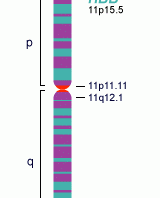
Perspective on Screening for Sickle Cell Trait in Student Athletes

In some ways this seems like a pro-active, well-intentioned policy that could save lives. On the other hand, as discussed in the NEJM piece, the new screening policy raises a host of challenging issues:

* how will colleges inform minor players’ parents about results?
* how will the schools handle players’ privacy?…

Posted in Diagnosis, Genetics, Hematology (blood), Medical News, Under the RadarTagged , , , , , , , 2 Comments on Perspective on Screening for Sickle Cell Trait in Student Athletes

A Visit to Suffragette City

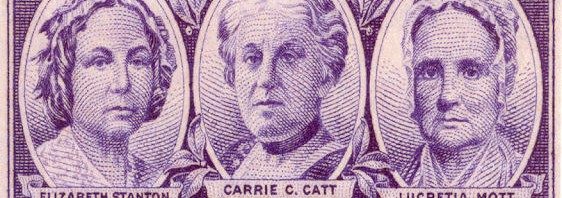
For two days I’ve been traveling on a short road-trip with my family in Upstate New York. As far as this turning to a medical lesson, all I can say is that for the first time in my life I witnessed, first-hand, the vaguely digital, elongate and eponymous geography of the fine Finger Lakes…

Posted in Medical History, Travel, Women's HealthTagged , , , , , , Leave a Comment on A Visit to Suffragette City

Why Physicians Shouldn’t Tweet About Their Patients Or O.R. Cases

As a patient who’s been there, under anesthesia more times than I care to remember, I can’t imagine anything much worse than knowing while I’m unconscious my doctor might be on-line or even just dictating tweets instead of concentrating on me, my arteries and veins and spine and…

Posted in Communication, Health IT, Life as a Doctor, Medical Ethics, Privacy, Social MediaTagged , , , , , 6 Comments on Why Physicians Shouldn’t Tweet About Their Patients Or O.R. Cases

On Patient Empowerment and Autonomy

…I think the answer is inherent in the goal of being engaged, and that has to do with the concept of patient autonomy – what’s essentially the capacity of a person to live and make decisions according to one’s own set of knowledge, goals and values.

Autonomy in medicine, which borders on the empowerment idea, can be an aim in itself, and therefore valuable regardless of any measured outcome.

Posted in Communication, Empowered Patient, Neurology, Patient Autonomy, Patient-Doctor Relationship, Social MediaTagged , , , , , , , , , 3 Comments on On Patient Empowerment and Autonomy

Another Take On An Ordinary Day

…Live Each Day Like There’s a Lot of Them Left….What she articulated is the idea that maybe the best thing to do after cancer is to live, essentially, as you would do otherwise, except with a bit of added balance:

Posted in cancer survival, Essential Lessons, Life, Life as a Patient, Patient Autonomy, Women's HealthTagged , , , , , , 2 Comments on Another Take On An Ordinary Day

Eye Care

…the office has expanded and become so systematized that when I go there I don’t feel like I’m visiting a doctor, the kind of professional who sincerely cares about my health. Instead I feel like a commodity, which I suppose I am.

Posted in health care delivery, Life as a Patient, Patient-Doctor Relationship, Physical ExaminationTagged , , , , , , , , 1 Comment on Eye Care

New NY State Law on Information for Women Undergoing Mastectomy

The reality is that many women, particularly poor women without newspapers or internet access in their homes, don’t know about any of this. They don’t know their insurance covers pretty much all of these options, by law. Now they will, or should as of Jan 1, 2011. Good. The other curiosity is that …

Posted in Breast Cancer, cancer treatment, Communication, Medical News, Patient Autonomy, Plastic and Reconstructive SurgeryTagged , , , , , , , 2 Comments on New NY State Law on Information for Women Undergoing Mastectomy

First Take On the Big C

The Big C’s plot includes at least two “atypical” and potentially complex features. First, Cathy chooses not to take chemotherapy or other treatment. This intrigues me, and may be the show’s most essential component – that she doesn’t just follow her doctor’s advice. Second, she doesn’t go ahead and inform her husband, brother or son about the condition, at least not so far…

Posted in cancer awareness, Communication, Informed Consent, Oncology (cancer), TV, Women's HealthTagged , , , , , , , 1 Comment on First Take On the Big C

The Physical Exam’s Value is Not Just Emotional

But what’s also true, in a practical and bottom-line sort of way, is that a good physical exam can help doctors figure out what’s wrong with patients. If physicians were more confident – better trained, and practiced – in their capacity to make diagnoses by physical exam, we could skip the costs and toxicity of countless x-rays, CT scans and other tests.

Posted in Diagnosis, Essential Lessons, Medical Education, Patient-Doctor Relationship, Physical ExaminationTagged , , , , , 4 Comments on The Physical Exam’s Value is Not Just Emotional
newsletter software