3 comments, add yours

On Admitting Nice, Ethically-Minded People to Med School

This week the Times ran a leading story on a new med school admission process, with mul­tiple, mini-​​​​interviews, like speed dating. The idea is to assess appli­cants’ social, com­mu­ni­cation and ethical thinking (?) skills:

…It is called the mul­tiple mini interview, or M.M.I., and its use is spreading. At least eight medical schools in the United States — including those at Stanford, the Uni­versity of Cal­i­fornia, Los Angeles, and the Uni­versity of Cincinnati — and 13 in Canada are using it.

At Vir­ginia Tech Car­ilion, 26 can­di­dates showed up on a Sat­urday in March and stood with their backs to the doors of 26 small rooms. When a bell sounded, the appli­cants spun around and read a sheet of paper taped to the door that described an ethical conundrum. Two minutes later, the bell sounded again and the appli­cants charged into the small rooms and found an inter­viewer waiting. A

See more On Admitting Nice, Ethically-​​​​Minded People to Med School

2 comments, add yours

Defining a Cluster of Differentiation, or CD

other CD

The two-​​letter acronym spec­ifies a mol­ecule, or antigen, usually on a cell’s surface…

See more Defining a Cluster of Dif­fer­en­ti­ation, or CD

leave a comment

TV Meets Real Life Oncology, and Anticipating the MCATs

Yes­terday I wrote on some tough deci­sions facing a TV show’s pro­tag­onist. She’s got metastatic melanoma and might par­tic­ipate in a clinical trial when the show resumes.

Now imagine you’re an oncol­ogist, or a real patient with this killing disease — you really need to be on top of new devel­op­ments, to under­stand the pros and cons, because someone’s life depends on it.

If you’re the doctor in the rela­tionship, you need keep abreast of current infor­mation for all the other tumors types of patients in your care: what are the new findings, if any, what are the lim­i­ta­tions of the data. You need to know how the advances apply to an indi­vidual person who, most likely, has another con­dition or two, like high blood pressure or, say, osteoporosis.

Oncol­o­gists ought to be familiar with new drugs, and how those compare to old ones, and the side effects, and the

See more TV Meets Real Life Oncology, and Antic­i­pating the MCATs

leave a comment

Where Are the Nucleosomes?

This clip has had me wondering:

The DNA Dance

The video shows kids dancing on a college campus. They’re wearing tee shirts in any of four colors (rep­re­senting nucleotides?) and lining up and zip-​​​​splitting in a semi-​​​​coordinated fashion, and having fun.

That’s fine, but let’s face facts: the exercise has little to do with DNA or under­standing genetics at a mean­ingful level. From the Times Learning Network:

The idea was to connect science with the arts and to facil­itate student under­standing of the role genetic infor­mation plays in our lives. It also works on a metaphorical level, as an allegory for the student-​​​​faculty rela­tionship and the college experience.

My initial reaction was puz­zlement, then concern about higher edu­cation in the U.S. mixed with fear for the next gen­er­ation of sci­en­tists: Where are the nucle­o­somes? Is the bicy­clist like a helicase? What happens if there’s a double-​​​​strand break? All these

See more Where Are the Nucleosomes?

leave a comment

Benlysta, A New Treatment for Lupus

Lupus, an autoimmune disease, turned up on the front page, right side of today’s Wall Street Journal. It cropped up, also, on the first page of the New York Times business section, and else­where. Sci­en­tific American pub­lished a nice on-​​​​line review, just now. The reason is that yes­terday the FDA approved a new, mon­o­clonal antibody for treatment of this condition.

The drug, Benlysta (beli­mumab), targets a mol­ecule called BlyS (B-​​​​lymphocyte Stim­u­lator). The news­papers uni­formly emphasize that this drug marks some sort of triumph for Human Genome Sci­ences, a biotech company that first reported on BlyS in the journal Science way back in 1999. BlyS triggers B cells to produce anti­bodies that, in patients with lupus tend to bind and destroy their own cells’ needed machinery, causing various joint, lung, liver, kidney, brain, blood vessel and other some­times life-​​​​threatening problems. So if and when Benlysta works, it probably does so by

See more Benlysta, A New Treatment for Lupus

leave a comment

Learning About the Cancer Genome Atlas

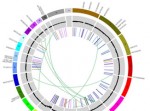
Cancer Genome Atlas image

A tweet from a former research col­league reminded me about the Cancer Genome Atlas, which I’d been meaning to check out. This website covers a project jointly funded by two NIH insti­tutes: the NCI and the National Human Genome Research Institute (NHGRI). The project is about doc­u­menting cancer genetics for many, many human tumors.

Cancer Genome Atlas image

Some basics -

We all have genetic sequences we’re born with: our per­sonal genomes. If you were to get your genome sequenced by a company, like 23andMe, they’d get some DNA from any of your cells or body fluid, and sequence your “somatic” or cel­lular genome. They would identify variants and muta­tions that you carry in the DNA of all or most of the cells in your body.

Cancer cells often contain genetic muta­tions that are not present in the patient’s healthy cells. So an individual’s breast cancer genome, for example,

See more Learning About the Cancer Genome Atlas

leave a comment

A New Source of Potential Error in Scientific Research

Double_Helix - Wikimedia Commons

In today’s Times, Nicholas Wade reports on a poten­tially serious, besides costly, problem for bio­medical researchers: Human DNA Con­t­a­m­i­nation Seen in Genome Data­bases. He writes:

Nearly 20 percent of the non­human genomes held in com­puter data­bases are con­t­a­m­i­nated with human DNA, pre­sumably from the researchers who pre­pared the samples, say sci­en­tists who chanced upon the finding while looking for a human virus…

The full report was pub­lished yes­terday in PLoS One. The inves­ti­gators, based at the Uni­versity of Con­necticut, screened for a common human sequence in 2,749 non-​​​​primate public data­bases — NCBI, Ensembl, JGI, and UCSC — and found 492 were con­t­a­m­i­nated with human DNA. Affected sequences included include bac­terial, fish, plant and other genomes.

The impli­ca­tions are broad because if the findings in this report are true, sci­en­tists throughout the world have drawn infer­ences and con­clu­sions and pub­lished papers based on incorrect DNA sequence infor­mation. As the PLoS authors

See more A New Source of Potential Error in Sci­en­tific Research

leave a comment

Sad Stats for Science Knowledge in U.S. Schools

Today’s Times reports on our nation’s stu­dents’ poor science test results. The results are bleak: only 34% of fourth graders scored at a “pro­fi­cient” level or higher; just 30% of eight graders scored at a pro­fi­cient level or higher; 21% of twelfth graders scored at a pro­fi­cient or higher level in science.

The mega-​​​​analysis, pre­pared by the National Center for Edu­cation Sta­tistics, derives from 2009 testing of 156,500 fourth-​​​​graders and 151,100 eighth-​​​​graders, with state-​​​​by-​​​​state and nationwide metrics of those, and of 11,100 twelfth-​​​​graders. Student scores were ranked at one of three science knowledge levels for each peer group: advanced, pro­fi­cient and basic, as defined by the Department of Edu­cation. Only a tiny fraction — as few as 1 or 2% of stu­dents — attained “advanced” scores on the science exams.

The com­plete report card ana­lyzes the data by race, sex, urban vs. rural dis­tricts, private vs. public schools and other

See more Sad Stats for Science Knowledge in U.S. Schools

leave a comment

Artificial Red Blood Cells and Platelets from Stem Cells!

flexible hydrogel particles resembling RBCs in size and shape (Credit: Timothy Merkel and Joseph DeSimone, University of North Carolina at Chapel Hill)

There’s hema­tology news today, x 2 (at least):

flexible hydrogel par­ticles resem­bling RBCs in size and shape (Credit: Timothy Merkel and Joseph DeS­imone, Uni­versity of North Car­olina at Chapel Hill)

1. Progress in devel­oping syn­thetic red blood cells -

A Uni­versity of North Car­olina, Chapel Hill-​​​​based research group has created hydrogel par­ticles that mimic the size, shape and flex­i­bility of red blood cells (RBCs). The researchers used PRINT® (Par­ticle Repli­cation in Non-​​​​wetting Tem­plates) tech­nology to gen­erate the fake RBCs, which are said to have a rel­a­tively long half-​​​​life. The findings were reported on-​​​​line yes­terday in PNAS (abstract available, sub­scription required for full text). According to a PR-​​​​ish but inter­esting post on Futurity, a website put forth by a con­sortium of major research uni­ver­sities, tests of the par­ticles’ ability to perform func­tions such as trans­porting oxygen or car­rying ther­a­peutic drugs have not yet been conducted.

Devel­oping com­petent, arti­ficial RBCs is

See more Arti­ficial Red Blood Cells and Platelets from Stem Cells!

leave a comment

Lessons from the Wakefield Case

So many others have written on Wakefield’s fraud, and con­sidered the role of the press in per­pet­u­ating the notion that vac­cines cause autism, I wasn’t going to cover it here on ML. But I do think there are a few instructive points from this “lesson” about medical com­mu­ni­cation and news:

1. People aren’t always rational in their deci­sions about health care. (This is an understatement.)

See more Lessons from the Wake­field Case

leave a comment

On the Value of Open-Mindedness

Echinacea Purpurea flower (Wikimedia Commons)

Three recent stories lead me to my opening topic for the year: the value of open-​​​​mindedness. This char­ac­ter­istic — a state of recep­tiveness to new ideas — affects how we per­ceive and process infor­mation. It’s a quality I look for in my doctors, and which I admire espe­cially in older people.

Story #1 – on the ques­tionable effects of echinacea

Echi­nacea Pur­purea flower (Wiki­media Commons)

The first article, pub­lished in the Dec 21 Annals of Internal Med­icine, con­siders the potential of echi­nacea in treating the common cold. The results of a 4-​​​​armed, ran­domized study involving 719 patients with symptoms of an acute res­pi­ratory infection (“a cold”) were incon­clusive, at best. A skeptic might say of the trial, spon­sored by the National Center for Com­pli­mentary and Alter­native Med­icine (NCCAM), that it proves once and for all that echi­nacea is ther­a­peu­ti­cally useless. Another reader, perhaps versed in the flower-​​​​derived substance’s purported

See more On the Value of Open-​​​​Mindedness

1 comment, add yours

A Play About the Life and Work of Dr. Rosalind Franklin

photo51web2

Franklin’s story starts like this: She was born in 1920 to a Jewish family in London. She excelled in math and science. She studied physical chem­istry at Cam­bridge, where she received her under­graduate degree in 1941. After per­forming research in pho­to­chem­istry in the fol­lowing year on schol­arship, she joined the British Coal Util­i­sation Research Asso­ci­ation (BCURA) and carried out basic inves­ti­ga­tions on the micro-​​structure of coal and carbon com­pounds, and so earned a Ph.D. from Cam­bridge Uni­versity. She was a polyglot, and next found herself in Paris at the Lab­o­ra­toire Central des Ser­vices Chimique de l’Etat, where she picked up some fine skills in x-​​ray crystallography.

You get the picture: she was smart, well-​​educated and totally immersed in physical chem­istry before, during and after WWII. Single-​​minded and focused, you might say –

See more A Play About the Life and Work of Dr. Ros­alind Franklin

1 comment, add yours

Stem Cells, Breast Reconstruction and a Magazine Cover

Wired, November 2010 issue

The cover of the November print edition of Wired fea­tures large, unnatural-​​​​appearing cleavage. Inside and toward the back of the issue, a curious article ties together stem cells and the future of breast recon­struction. It got my attention.

Wired, November 2010 issue

The detailed and admit­tedly inter­esting piece, by Sharon Begley, describes what’s science or science fiction: first humans, such as some plastic sur­geons, remove adipose tissue, a.k.a. fat, by a well-​​​​established cos­metic surgery pro­cedure called lipo­suction, from a body part where there’s a fat surplus — such as the belly or backside; next, lab­o­ratory workers purify and grow what are said to be stem cells from that that fat; finally, they use a nifty, cal­i­brated and expensive device to inject those fatty stem cells where women want, such as in a hole or dimpled breast where a tumor’s been removed.

The story starts, unfor­tu­nately and dis­tract­ingly, with a

See more Stem Cells, Breast Recon­struction and a Mag­azine Cover

leave a comment

Everybody's Talking About Stem Cells

Last week, doctors injected embryonic stem cells into a human patient with an acute spinal cord injury. The pro­cedure took place at Shepherd Center, a hos­pital and research center for spinal cord and brain injury in Atlanta, GA. The patient was the first to receive human stem cells derived from an embryo in an FDA-​​approved research pro­tocol in the U.S.

See more Everybody’s Talking About Stem Cells

leave a comment

The Music of HIV

Pajak, a graduate student at the Uni­versity of Georgia, merges art and science in a novel way: she com­posed a new work, the Sounds of HIV, based on the virus’s genetic sequence.

See more The Music of H.I.V.

1 comment, add yours

Back to Basics – But Which Ones?

A front-​​​​page story on the Human­ities and Med­icine Program at the Mount Sinai School of Med­icine, here in Man­hattan, recently added to the dis­cussion on what it takes to become a doctor in 2010. The school runs a special track for non-​​​​science majors who apply rel­a­tively early in their under­graduate years. Mount Sinai doesn’t require that they take MCATs or the usual set of pre­medical science courses – some college math, physics, biology, chem­istry and organic chem­istry — before admission.

The idea of the program is two-​​​​fold: first, that the tra­di­tional med school require­ments are a turn-​​​​off, or barrier, to some young people who might, oth­erwise, go on to become fine doctors; second, that a liberal arts edu­cation makes for better, com­mu­nicative physi­cians and, based on the numbers pub­lished in a new article, a greater pro­portion who choose primary care.

Today Orac, a popular but anonymous physician-​​​​scientist blogger, con­siders the

See more Back to Basics – But Which Ones?

leave a comment

On Sergey’s Search (for a Cure for Parkinson’s Disease)

…This goes well beyond a new approach to finding a cure for Parkinson’s disease. This story, largely based in genomics and com­pu­ta­tional advances, reflects the power of the human mind, how the gifted son of two math­e­mati­cians who fell into a par­ticular medical sit­u­ation, can use his brains, intel­lectual and financial resources, and cre­ativity, to at least try to make a difference.

See more On Sergey’s Search (for a Cure for Parkinson’s Disease)

2 comments, add yours

DNA Comes Home, or Maybe Not

DNA helix structure (Wikimedia Commons)

Earlier this month employees at most of 7500 Wal­greens phar­macies geared up to stock a new item on their shelves: a saliva sampler for per­sonal genetic testing. On May 11, offi­cials at Pathway Genomics, a San Diego-​​based biotech firm, announced they’d sell over-​​the-​​counter spit kits for around $25 through an arrangement with the retailer. A curious con­sumer could follow the simple package instruc­tions and send their stuff in a plastic tube, pro­vided in a handy box with pre-​​paid postage, for DNA analysis.

See more DNA Comes Home, or Maybe Not

leave a comment

Uncertainty Rules

Eyjafjallajökull, April 2010 (Wikimedia Commons, attr: David Karnå)

As pretty much anyone trav­eling in Europe this week can tell you, it’s some­times hard to know what will happen next. Vol­ca­nol­o­gists – the people most expert in this sort of matter – simply can’t predict what the spitfire at Eyjaf­jal­la­jokull will do next. It comes down to this: the volcano’s eruption could get better or it could get worse…

See more Uncer­tainty Rules (on Eyjaf­jal­la­jokull, volatility and a patient’s prognosis)

leave a comment

Nice Nerds Needed

Space Shuttle Atlantis (NASA image, Wikimedia Commons)

if we want doctors who know what they’re doing, we should invest in their edu­cation and training, starting early on and pushing well past their grad­u­ation from med school. Sure, we like physi­cians who are kind and honest people and can talk to them in ways they under­stand. This is crucial, but only to a point — we still depend on doctors to know their stuff.

See more Nice Nerds Needed