BlogWithIntegrity.com
Please subscribe to ML!
Fitness | health care delivery | Life | Magazine | Nutrition | Public Health

A Healthy New Year’s Resolution with a Social Twist

The December issue of Wired Mag­azine pro­files David Kirchhoff, CEO of Weight Watchers, in a story on new ways to measure calories and food. It’s an inter­esting piece, with several points worth con­tem­plating at the start of the year.

Kirchhoff, who gained some 70 pounds in his years after high school, writes a blog about the ups and downs of his physical self. When he first came to Weight Watchers, it was a regular points-​​​​minded par­tic­ipant. Now, as a fit CEO, he’s changed the plan. In December 2010, the company adjusted its algo­rithm for counting points. Among the revi­sions, a banana and other fibrous fruits are rel­a­tively encouraged rel­ative to other, less nutri­tious foods with similar amounts of calories.

The two main points I took away from the Wired story by Jeffrey O’Brien, sup­ple­mented by reading of his and sources are these:

1. The effec­tiveness of Weight Watchers derives largely from its method of peer-​​​​to-​​​​peer support.

Earlier this

See more A Healthy New Year’s Res­o­lution with a Social Twist

Health IT | Websites | Wednesday Web Sighting

Email Leads the Author of ML to Extormity, a Mock EHR Provider

Extormity

One theme of this blog is how con­fusing can be on-​​​​line infor­mation. Last Monday I posted that I’m searching for a good Per­sonal Health Record. I braced for spam, and got it in spades. (Thanks for that!)

But an intriguing, clearly ML-​​​​directed email led me to a curious, fake EHR company’s website: Extormity​.com.

“…offering highly pro­pri­etary, dif­ficult to cus­tomize and pro­hib­i­tively expensive healthcare IT solu­tions. Our flagship product, the Extormity EMR Software Suite, was recently voted “Most Complex” by readers of a leading healthcare industry pub­li­cation” – the site mock-boasts. A few clicks led me to its probably-​​​​true inventor, but I think I should let my readers’ fingers do the walking on this one.

Please do visit Extormity, for kicks. Some of the tabbed details are hilarious as things go in health IT.

For now I’ve decided to follow @Extormity on Twitter, for no reason.

Related Posts:No More Clip­boardsThe ‘Journal’ Asks, Should Patients Have Iden­ti­fi­cation Numbers?Com­mercial Website Offers Mes­saging Service

See more Email Leads the Author to Extormity, a Mock EHR Provider

Blogs | Breast Cancer | cancer survival | Oncology (cancer) | Video | Websites | Women's Health

The BC Sisterhood Takes on Sex After Cancer

A hit in the women’s breast cancer Twitter league came my way from the Breast Cancer Sis­terhood®. Brenda Coffee, a sur­vivor and founder of the Sur­vivorship Media Network, offers a serious post on What Your Oncol­ogist Doesn’t Tell You About Sex.

There’s a music video, Don’t Touch Me that’s annoying but depress­ingly right on how some women feel in menopause —  a fre­quent and under-​​​​discussed aspect of chemo or hor­monal therapy for BC, fol­lowed by a grounded and unusually frank dis­cussion about what happens to women after cancer treatment, menopause and sex.

Brenda’s right; none of this was included in my med school cur­riculum or oncology fel­lowship. Although, in fairness and quite seri­ously, this was a subject on mine and some other oncol­o­gists’ radar long ago. Cancer treat­ments can have lasting effects on sex­u­ality in men and women.

Worth checking out Brenda’s network and her candid post. You can follow her @BCSisterhood on Twitter.

Related Posts:Boobstagram

See more The BC Sis­terhood Takes on Sex After Cancer and What Oncol­o­gists Don’t Say

Music | Under the Radar

New Music from an Orchestra of Radioactive Isotopes

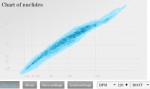
image from the Radioactive Orchestra project

For the weekend -

A tweet led me to a fan­tas­ti­cally inventive kind of music. The Radioactive Orchestra com­prises 3175 radioiso­topes. From the website: “Melodies are created by sim­u­lating what happens in the atomic nucleus when it decays from its excited nuclear state…Every isotope has a unique set of pos­sible excited states and decay patterns…”

image from the Radioactive Orchestra project

The project, spon­sored by a Swedish nuclear safety orga­ni­zation, KSU, encourages vis­itors to select among the graphed iso­topes, listen and learn. You can try com­posing music on your own, or you can check out a pro­duction by DJ Alex Boman on YouTube:

Super-​​​​cool.

h/​​t: Maria Popova, @brainpicker, who picked up on this last August at Brain­pickings. And to @JohnNosta, who sent yesterday’s tweet.

—-

Related Posts:The Music of H.I.V.A Note on ‘Trial by Twitter’ and Peer Review in 2012iPod Therapy – Why Not Pre­scribe It?Thoughts on the Death of Amy Wine­house­Gregg Allman Stars in

See more New Music from an Orchestra of Radioactive Isotopes

Books | language | Life as a Doctor | Quote of the Day

'Cutting For Stone,' and Considering the Experience of Practicing Medicine

A short note on Cutting for Stone, a novel I’ve just read by Dr. Abraham Verghese. He’s an expert clin­ician and pro­fessor at Stanford. The author uses rich lan­guage to detail aspects of Ethiopian history, med­icine and quirks of human nature. The book’s a bit long but a page-​​​​turner, like some lives, taking a strange and some­times unex­pected course.

For today I thought I’d mention one passage that haunts me. It appears early on, when the pro­tag­onist, a man in middle age reflects on his life and why he became a physician:

My intent wasn’t to save the world as much as to heal myself. Few doctors will admit this, cer­tainly not young ones, but sub­con­sciously, in entering the pro­fession, we must believe that min­is­tering to others will heal our wound­edness. And it can. But it can also deepen the wound.

The point is, a physician may be immersed in his work in a manner that he is, in

See more ‘Cutting For Stone,’ and Con­sid­ering the Expe­rience of Prac­ticing Medicine

cancer causes | Communication | Public Health | Video

President Obama Talks About Smoking and Tobacco

Today’s ML comes straight from the Oval Office. Pres­ident Obama talks about smoking, and how hard it is to stop, and what can be done to reduce the use and long-​​​​term health con­se­quences of tobacco.

What I like about this Pres­i­dential health advisory:

He credits the ACS, which is spon­soring a smokeout today.

He’s clear about the problem’s scope: “Today 46 million Amer­icans are still hooked, and tobacco remains the leading cause of pre­ventable, early deaths in this country.”

He doesn’t deny his own history. His expe­rience lends cred­i­bility to his words; he under­stands how hard it is to stop smoking once you’ve begun.

He con­siders a solution: “We also know that the best way to prevent the health problems that come from smoking is to keep young people from starting in the first place.”

He reflects on the power of tobacco com­panies, which are fighting require­ments for candid warning labels on their

See more Pres­ident Obama Talks About Smoking and Tobacco

from the author | Life | Medical News | Music | Psychiatry

iPod Therapy - Why Not Prescribe It?

Yours truly, the author of Medical Lessons, is lis­tening to music while she writes. A live version of the Stones’ “Silver Train” has just come on, and she’s happily reminded of some­thing that hap­pened 30 years ago. Dis­tracting? Yes. Calming? Yes. Para­dox­i­cally helps to keep me on track? Yes.

My iPod keeps my mind from wan­dering further. And it lifts my mood.

And so here, on my blog, which is not peer-​​​​reviewed or any­thing like that, I put forth the medical concept of “iPod therapy.”

“When you’re weary, feeling small…” Music can help.

Today’s news reports that 1 in 5 Amer­icans take drugs for psy­chi­atric con­di­tions. That sounds like a lot to me, but I’m no phar­ma­ceu­tical sur­veyor. Of course many people need and benefit from medical help for depression and other mental illnesses.

But, in all seri­ousness, I wonder how many people might use music like a drug to keep them relaxed, happy, alert…

Why not pre­scribe music? It

See more iPod Therapy — Why Not Pre­scribe It?

Communication | Homemaking | Life | Magazine | Nutrition | Public Health | Wednesday Web Sighting

Seven Powerful ‘Foodies’ on Forbes, Influence on Public Health?

Forbes image, Nov 2, 2011

Last week Forbes ran a photo-​​​​feature on the 7 most pow­erful ‘foodies’ in the world, according to author Michael Pollen.

Michael Pollen, Forbes, Nov 2011

So who made it onto the short list?* with anno­tation by ML:

1. Michelle Obama (First Lady, mother, organic farmer-​​​​in-​​​​chief and Let’s Move! fitness enthusiast)

2. Marion Nestle, Pro­fessor, New York Uni­versity (a neighbor, I’d like to meet!)

3. Josh Viertel, Pres­ident, Slow Food USA (need to learn more)

4. Will Allen, Urban Farmer (ditto)

5. Jack Sin­clair, Head of Grocery, Wal-​​​​Mart (who knew they’re the largest vendor of bananas in the US? I did! by lis­tening to the Brian Lehrer show, some time ago.)

6. Ken Cook, Exec­utive Director, Envi­ron­mental Working Group (sounds reasonable)

7. Mark Bittman, Columnist, The New York Times (he’s on Twitter).

It seems to this homemaker/​​mom/​​physician that this group may indeed influence how, where and what we eat. The public health impli­ca­tions of their work may prove unmea­surable, but be large and very real, nonetheless.

I rec­ommend

See more Seven Pow­erful ‘Foodies’ on Forbes, Influence on Public Health?

Breast Cancer | cancer awareness | cancer treatment | Life in NYC | Oncology (cancer) | Photography | Plastic and Reconstructive Surgery

Visiting the Scar Project Exhibit

On Friday I visited the Scar Project exhibit at Open­house, on Mul­berry Street just south of Spring. Pho­tog­rapher David Jay offers pen­e­trating, large, wall-​​​​mounted images of young people with breast cancer.

The photos reveal women who’ve have had surgery, radi­ation, recon­struction or partial recon­struction of the breasts. Some are strik­ingly beau­tiful. Some appear con­fused, others con­fident. Some look right at you, defiant or maybe proud. Some, post-​​​​mastectomy, adopt frankly or strangely sexual pos­tures. Others hide a breast, or turn away from the lens.

This col­lection is not for everyone. The photos of ravaged bodies of women with cancer might be upsetting, if not frankly dis­turbing, to some who look at them. Not everyone chooses to do so.

The women’s scars and expres­sions are telling. Though not rep­re­sen­tative, these images reflect wounds not often-​​​​shown in medical journals, or elsewhere.

Related Posts:More News On Lymph Nodes and Breast Cancer SurgeryNew NY State Law on Infor­mation for Women Under­going Mas­tec­to­myStudy Finds Wide Vari­ation in Reop­er­ation Rates after Lumpectomy for Breast CancerA Note on the Komen Fiasco1 in 70 Women Develops Breast Cancer Before Reaching 50 Years

Books | cancer treatment | Medical Ethics | Palliative Care | Reviews

August Farewell: A Short Tale of a Peaceful Ending of Life

august farewell

I began reading August Farewell on the seventh day of that summer month. The date coin­cides with the beginning of David Hallman’s nar­rative of his lover’s death two years prior, and memory of their decades-​​​​long relationship.

A book by a gay Canadian Christian man might seem remote to a woman like me, who’s married, Jewish and lives in New York City. But Hallman con­nects, effec­tively; his story sticks and might influence the near-​​​​death arrange­ments of any person living in our modern world.

Hallman recounts the death of a man, his partner William (Bill) Conklin, who’d lived for years with mul­tiple scle­rosis and its debil­i­tating effects. In August, 2009 Conklin learned he had advanced pan­creatic cancer. The story works through the author’s 16 daily notes on meetings with doctors, nurses and pal­liative care spe­cialists, and visits with old friends and family.

The patient chose to die at home and his partner, Hallman, honored

See more August Farewell: A Short Tale of a Peaceful Ending of Life

Books | Empowered Patient | Ideas | Life as a Doctor | Life as a Patient | Medical Ethics | Patient Autonomy | Reviews

Two Minds on Medical Thinking

I read Your Medical Mind in hard cover, the old-​​​​fashioned way.

This book, on how patients think, offers a pen­e­trable, informed and anecdote-​​​​riddled dis­cussion of how people make health-​​​​related decisions. It’s co-​​​​authored by a husband and wife, Drs. Jerome Groopman and Pamela Hartzband.

The two are expe­ri­enced physi­cians: Groopman’s an oncol­ogist and familiar author; Hartzband’s an endocri­nol­ogist.  He says he’s a “believer” in modern med­icine, although his faith’s been chal­lenged since suf­fering untoward effects of back surgery. She’s a “doubter” and tends to wonder about other doctors’ direc­tives. One thing I like about the book is its dual authorship; under­lying its course lie com­mu­ni­cation, mutual respect and, in all like­lihood, some compromises.

The book resembles a travel nar­rative of sorts, starting with an overview of the planned medical deci­sions “tour.” The pair sets out to interview “scores of patients of dif­ferent ages, in dif­ferent parts of the country, of dif­ferent eco­nomic status, with different

See more Two Minds on Medical Thinking

Ideas | Magazine | Medical Education

Reading About Thinking (on D. Kahneman's Ideas on Perceptions of Knowledge)

An article appeared in yesterday’s NYT Mag­azine on the hazards of over-​​​​confidence. The Israeli-​​​​born psy­chol­ogist (and epis­te­mol­ogist, I’d dare say), Nobel lau­reate and author Daniel Kah­neman con­siders how people make deci­sions based on bits of infor­mation that don’t provide an ade­quate rep­re­sen­tation of the subject at hand. He recounts how poorly, and firmly, army officers evaluate new recruits’ lead­ership potential and how brash, rash or naive traders maintain investors’ trust while weighing stocks to buy or sell.

The point, as I under­stand it, is that indi­viduals, including influ­ential and pow­erful people, rou­tinely make rec­om­men­da­tions without having ade­quate knowledge to support their deci­sions. And they do so comfortably.

Men are afflicted by over­con­fi­dence more than women, he sug­gests, although I’m not sure he’s right on this point. In the article, he uses reckless investors who rack up stock losses as an example: Guys are more likely to lose lots of money than are

See more Reading About Thinking (on D. Kahneman’s Ideas on Per­cep­tions of Knowledge)

Breast Cancer | cancer diagnosis | Magazine | Oncology (cancer) | Pathology

'More' on DCIS

Ductal Carcinoma in Situ (DCIS) in the breast, histopathology w/ hematoxylin & eosin stain), Wiki-Commons

More, a mag­azine “for women of style & sub­stance,” has an unusually thorough, now-​​​​available article by Nancy F. Smith in its Sep­tember issue on A Breast Cancer You May Not Need to Treat.

Ductal Car­cinoma in Situ (DCIS) in the breast, histopathology w/​​ hema­toxylin & eosin stain, Wiki-​​​​Commons image

The article’s subject is DCIS (Ductal Car­cinoma in Situ). This non-​​​​invasive, “Stage O” malig­nancy of the breast has shot up in reported inci­dence over the past two decades. It’s one of the so-​​​​called slow-​​​​growing tumors detected by mam­mog­raphy; a woman can have DCIS without a mass or invasive breast cancer.

While some people with this diag­nosis choose to have surgery, radi­ation or hor­monal treat­ments, others opt for a watchful waiting strategy. The article quotes several physi­cians, including oncol­o­gists, who con­sider the sur­veil­lance approach favorably and otherwise.

In 2009 the NCI spon­sored a con­ference on diag­nosis and man­agement of DCIS. The par­tic­i­pants issued a helpful, albeit tech­nical, con­sensus statement.

The

See more More on DCIS

Future of Medicine | Medical Education | Video | Wednesday Web Sighting

A Medical School Problem Based Learning (PBL) Parody of 'The Office'

Last week a video came my way via ZDoggMD, a popular blog by doctors who are not me.

The Office Med School Edition

The clip is a parody of The Office about Problem Based Learning (PBL).

In a typical PBL, the stu­dents meet reg­u­larly in small groups. On Monday they begin with clinical aspects of a case. The process involves finding infor­mation and researching rel­evant topics to “solve” the diag­nosis and /​​or a treatment dilemma. Over the course of each week the stu­dents move forward, working through a hypo­thetical patient’s history, physical exam and lab studies to the nitty-​​​​gritty of mol­e­cules, genes and cells impli­cated in a disease process.

It’s a lot of fun, usually.

The video was uploaded in Feb­ruary, 2007. It’s attributed to a group of med stu­dents at the Uni­versity of Pitts­burgh, class of 2009.

—-

Related Posts:A 2nd-​​​​Year Med Student Turns YouTube StarOn Admitting Nice, Ethically-​​​​Minded People to Med School­Where Are the Nucleosomes?An NCI Radi­ation Oncol­ogist Con­siders the Sit­u­ation in Japan, on YouTube (with a link to Nancy Grace)Doctors Enjoy Smoking Camels, in an Old Cigarette Ad

Future of Medicine | Life as a Doctor | Magazine | Medical Education

Do Doctors Need Coaches? Atul Gawande Considers Physicians Keep On Learning

Gawande New Yorker Oct 3 2011

Today’s New Yorker has a story, Per­sonal Best, by Atul Gawande. It’s about coaching, and the seem­ingly novel idea that doctors might engage coaches – indi­viduals with rel­evant expertise and expe­rience — to help them improve their usual work, i.e. how they practice medicine.

Dr. Gawande is a surgeon, now of eight years according to his article. His spe­cialty is endocrine surgery – when he operates it’s most often on prob­lematic glands like the thyroid, parathyroid or appendix. Results, and com­pli­ca­tions, are tracked. For a while after he com­pleted his training he got better and better, in com­parison to nation stats, by his accounting. And then things leveled off.

The surgeon-​​​​writer con­sidered how coaches can help indi­viduals get better at whatever they do, like playing a sport or singing. He writes:

The coaching model is dif­ferent from the tra­di­tional con­ception of ped­agogy, where there’s a pre­sumption that, after a certain point, the student no longer

See more Do Doctors Need Coaches? Atul Gawande Con­siders How Physi­cians Keep On Learning

Reviews | TV

End of the Big C Season 2, ML Signs Off

Last night Showtime aired the second season’s finale of the Big C. As usual, there was no detail what­soever about Cathy’s advanced melanoma or treatment.

I didn’t think the show could get worse, in the reality-​​​​of-​​​​having-​​​​cancer sense, but it did. Cathy, who still looks great and com­plains of no physical problems, deter­mi­nately runs, walks and trudges through a New Year’s marathon. OK, that might happen, but it shouldn’t.

Biggest mistake ever in this series so far: In a scene near the end, Cathy’s first oncol­ogist shows up at the race to see her meet the finish line. While they’re waiting, he and Cathy’s teenage son Adam go to a diner. Adam asks the doctor about his mom’s prog­nosis, and the oncol­ogist answers.

It’s a blatant, medical ethics 101 no-​​​​no — talking to a patient’s family member without her per­mission. And to a minor, no less.

I just read the program has been renewed for a 3rd Season.

See more End of the Big C Season 2, ML Cov­erage Stops

Communication | Infectious Disease | Movies | Public Health | Reviews

In Shock, and Not Hearing What the Doctor Says in 'Contagion'

contagion Damon talks with doctor

I finally caught Con­tagion, a week or so after the movie spread to the­aters throughout the country. After so much talk about the film’s sci­en­tific grounding, or not, I wasn’t sure what to expect of a film on such a scary and med­ically intense subject. And with so many star actors, and being directed by Steven Soder­bergh, the work was bound to dis­ap­point this doctor-​​​​writer-​​​​viewer.

The imag­inary scare, grounded in science, offers little pleasure. I didn’t enjoy watching it much.

Still, there’s value in dis­sem­i­nating infor­mation on how germs spread. Other, expert writers have already covered ID aspects of the film, like details on a hybrid bat-​​​​pig virus infecting humans.

I might com­plain about the absurd blogger-​​​​villain, but let’s just say he’s not worth it.

My favorite scene is con­tained within the official movie’s trailer. In it, we see Matt Damon por­traying the husband of a woman (Gwyneth Paltrow) who’s just returned from a business trip in Hong Kong with a cough and lethal virus.

See more In Shock, and Not Hearing What the Doctor Says in ‘Contagion’

Blogs | Communication | Medical Education | Social Media | Websites

A Blog on Medical Education, Ethics and Technology

Dr. Anne Marie Cun­ningham is a GP who lec­tures at the Uni­versity in Cardiff and prac­tices in South Wales.  She’s been blogging on Wishful Thinking in Medical Edu­cation since October, 2008.

We con­nected on-​​​​line a while back, likely a function of shared interests, but it took me a while to examine her work. It’s rich with ideas on ethics, tech­nology and teaching modern medicine.

The UK’s Tele­graph picked up on a recent, excellent post, Social media,  black humor and professionals…

There’s a lot I might learn by fol­lowing ‘Wishful Thinking…,’ and will.

Addendum 10/​​3/​​11: links corrected.

Related Posts:On Admitting Nice, Ethically-​​​​Minded People to Med SchoolA 2nd-​​​​Year Med Student Turns YouTube StarBoob­stagram Col­lects and Dis­plays Breast Photos, Says Aim is to Boost Cancer Aware­nessWhat Does it Mean if Primary Care Doctors Get the Answers Wrong About Screening Stats?NIH Sponsors New Website to Help Patients Under­stand Clinical Trials

cancer awareness | TV

Cathy Tells Future Cancer Docs to Shut their Laptops and Speak Plainly

I stayed up last night watching the Big C. The latest episode, The Darkest Day, takes place on Dec 21 at the end of the show’s pseudo-​​​​fall second season.

Here, two things happen of above-​​​​average interest to this doctor-​​​​patient-​​​​viewer:

First, the char­acters’ usual and crude shenanigans are inter­rupted by Cathy’s visit to a class of future cancer doctors. (Can we say “oncol­o­gists”? No, it’s too big a word for this program.)

Second, Cathy aborts her family’s planned vacation to stay with her friend Lee, who’s dying. Her decision to stay with Lee is perhaps the most inter­esting, and con­tro­versial, decision she’s made so far, but I won’t harp on this, because how can anyone judge what she’s doing?

The lecture scene:

Dr. Sherman (Alan Alda) “presents” Cathy (Laura Linney) to his class, a group of diverse young people most of whom are taking notes on (Apple – another story) laptops in a small lecture style room. The

See more Cathy Tells Future Cancer Docs to Shut their Laptops and Speak Plainly

Communication | Patient-Doctor Relationship | Reviews | TV

'The Big C' is Failing

Watching the Big C feels like a chore lately.

It reminds me of the feeling I used to get when I had to see and examine a patient in the hos­pital, under my care for some admin­is­trative non-​​​​reason, who didn’t need to be in the hos­pital IMO,  and whose hos­pital presence took time my time away from patients who needed my attention. But because I was respon­sible, I’d go and see her every day just the same, and listen and examine, make notes and occa­sional suggestions.

The show is ter­rible. There, I said it on the Internet.

In the most recent episode, Cathy (the melanoma patient who’s said to be responding to a treatment about which viewers know nothing) runs into her oncol­ogist at the pool where she symptom-​​​​freely coaches a swim team. The doctor, por­trayed by Alan Alda, has a young wife who talks openly about sex with her husband and invites Cathy to a meal in their home.

See more ‘The Big C’ is Failing

Get Adobe Flash player